SaaS Financial Model Training Videos
Free
Videos for the SaaS Financial Model.Don’t have the model yet? Click below to check it out:

Status of the videos
Update pending
- Updating videos is a pain in the A
- The models for the SaaS model are fine. I might update in future
- Ideally… I’ll add comments to each video…
Current version
Here we have the training videos for the SaaS fundraising model.
This is for model version 4.1 (as of October 2019).
Note on video dates
- I’m reusing some videos from the prior SaaS videos I initially did
- The core functions on the sheet videos haven’t changed. Like you, I have stuff to do…
- On the sheets, nothing has fundamentally changed (I may have done technical things in the background). If something is in fact really different, sound out with feedback in the comments and I will make a new video.
Nerd note
- I’ve made a few rounds of videos over the years. I don’t delete the old ones from my YouTube. If you want more nerdy videos (but features will have changed), I probably went into more detail back then as I knew the details more!
Questions?
- Also, if you are struggling with something, tell me what you would like explained and I’ll put up a video.

Model architecture
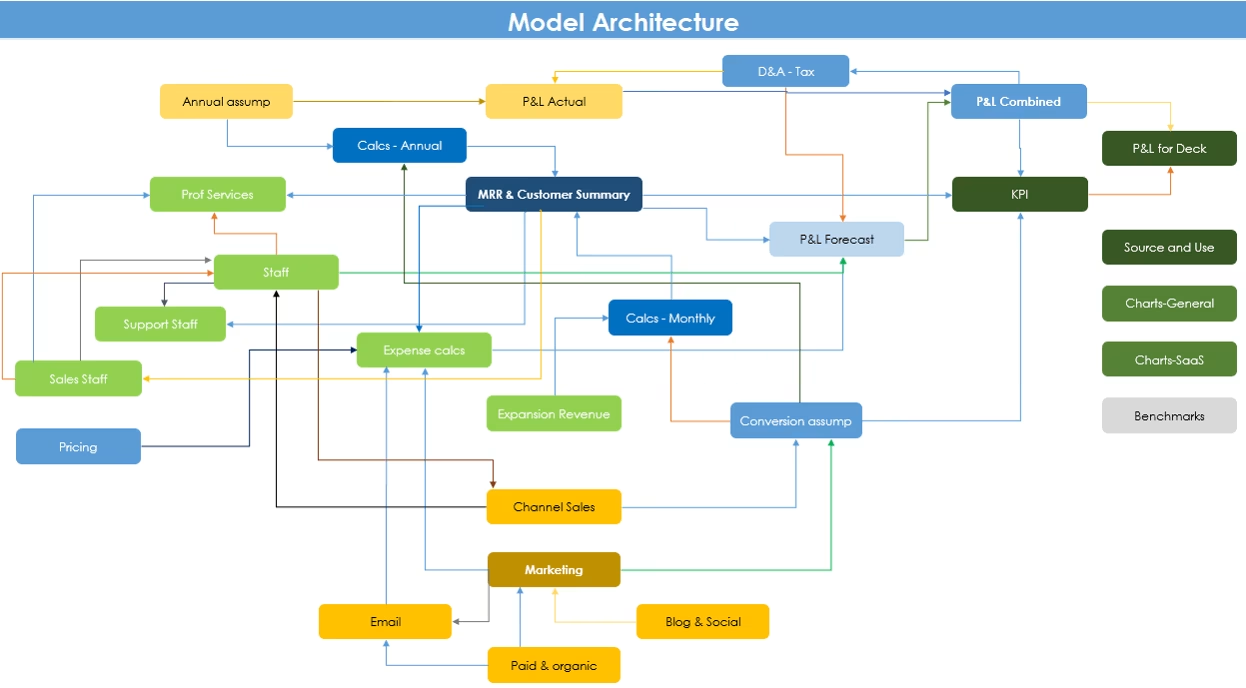
Forgotten which sheet is which?
There is a very quick overview of each of the 29 sheets in the SaaS model. I’ve mapped them out just in case it is useful when checking out the videos!
Introduction
We will cover the basics of the model. Don’t sleep on this. The basics are what ruin people.
Things to know about the model
Overview
- The first video in the SaaS financial model explains the basic modelling concepts.
- Boring I know, but important to understand exactly what to do and what not to do as it will save you time in the long-term!
This includes:
- Formatting
- Sparklines
- Columns
- Grouping
- Navigation
How to approach the model
Overview
- I’m going to give you my thoughts on how I would approach filling in the model. If you have never used a huge template like mine or have much financial modelling experience, this will really help you to understand what you should be doing.
- It’s important to internalise that this model will feel overwhelming to you at the start. You just need to start and keep learning more details over time. Eventually, it will make more sense to you.
- Understand that my models have facilitated learning experiences, not a destination you want to get to ASAP because “an investor wants one”.
Read
- I highly recommend reading this blog if you have not already How to fill in a financial model template
- I don’t care how senior you are, you’ll learn at least one new thing. You have to do the exercise that I explain in order to triangulate (as I will constantly reiterate to you in the videos).
Toggles
Overview
- Learn how to use basic vs. detailed functionality built into the model
- I give you options depending on the level of detail that you want to get into
Financial Sheets
We are going to understand the three profit and loss sheets, and the depreciation and tax sheet.
P&L Actual
Overview
- I invented a structure that allows you to update the model with Actuals for 11 months without having to change a tonne in the model (joy!)
- You input your financials in here
- Only two numbers (clients/revenue) filter into the forecast model
Historic annual calculations
Overview
- If you have a lot of annual contracts then you need to decide how to forecast them
- This sheet lets you deal with your annual contracts
- This may mean nothing to you, but if you have a lot of ARR you’ll know why this matters!
P&L Forecast
Overview
- Very little to do in this sheet other than set some assumptions such as discounts
P&L Combined and P&L for Pitch deck
Overview
- Nothing to do in this sheet other than look at it.
Note
- I’m reusing an old video from the original course.
Tax and Depreciation
Overview
- The depreciation and tax sheet enables you to do funky calculations assuming you are profitable.
- The title says D&A and tax. There is no amortisation in my model because it is irrelevant to startups. I’m just used to calling it D&A because I was a banker.
- You don’t have to do anything if you don’t understand the sheet.
Note
- I’m reusing an old video from the original course.
Support Sheets (KPI etc)
We are going to learn about the importance of the KPI sheet in the model. As an investor, this is a sheet I would certainly look at first. You will use it repeatedly to check you are on the right path, and at the end to ensure your assumptions coherently make sense.
We will also go through the charts sheet. They’re just charts so not much to learn! You use them to ensure that you are trending in the right direction.
KPI (detailed)
Overview
- The KPI sheet is super useful to understand if your model and business makes sense.
Note
- I’m reusing an old video from the original course. In the basic version, I’m going to talk about thinking about using KPIs. The old one is a bit nerdier.
Source and Use
Overview
- How are you going to use the funds? What is your runway? We are going to go through this sheet briefly so you understand how to use it. When you have completed your model, you can use this sheet to calibrate the raise you need and runway.
- If you want a ‘little’ more detail you can read and watch the video my runway calculator page.
Note
- I’m reusing an old video from the original course.
Charts
Overview
- They are charts 😉
Note
- I’m reusing an old video from the original course.
MRR Summary
Overview
- Another ways at looking at revenue.
Note
- I’m reusing an old video from the original course.
Revenue Assumptions
If you want to make money off your customers, you need to decide how to charge them. You do this here.
Conversion assumptions
Overview
- This is one of the most important sheets in the model
- Pay a lot of attention to it
Core pricing
Overview
- Set the pricing in your model
Note
- I’m reusing an old video from the original course.
Expansion Revenue
Overview
- If you have expansion revenue, it is dealt with in here
Note
- I’m reusing an old video from the original course.
Professional Services
Overview
- If you have professional services, you include them in this sheet
Note
- I’m reusing an old video from the original course.
Monthly and Annual Revenue Forecast Calculations
Overview
- All calculations. You can ignore unless you want to learn.
Expenses
Running your startup costs money. Deal with your staff and all the other related expenses in these sheets.
Staff and Expenses Forecast
Overview
- The staff sheet is the core expense sheet in the model. It enables you to do quite a lot, but also simply. Most of the sheet is for the various departments you have.
- The end allows you to add the various costs that you will have, which are mainly staff-related. Included are also the other general costs.
COGS Expense Calculations
Overview
- This sheet comprises of automated staff calculations and your other costs.
Note
- I’m reusing an old video from the original course.
Marketing
We are covering all the marketing sheets which create customers.
Marketing
Overview
- We deal with the main marketing sheet
Note
- I’m reusing an old video from the original course.
- I built in a market saturation function which most people won’t use. If you really need me to explain, ask.
Paid and Organic Marketing
Overview
- Core marketing sheet if you pay to acquire customers
- Also simple assumptions for organic users
Note
- I’m reusing an old video from the original course.
Email Marketing
Overview
- If you do email marketing as a user growth channel
Blog and Social Media Marketing
Overview
- Sheet for blogging and social media user acquisition.
Note
- I’m reusing an old video from the original course.
Channel Sales
Overview
- Some companies have channel partnerships on a CPA/CLP basis. Set how you acquires customers in this sheet
- Note that this sheet is dealt with a little differently than others due to the CPA part (It sort of skips a normal funnel… and yes, it was a pain to figure out the logic)
Note
- I’m reusing an old video from the original course.
Closing
Bonus video
Checking you got it right
Overview
- Added on checking the model (Please read below)
Note
- I made this for the ecommerce model and can’t see I did for SaaS. So stuffing it here in case learnings are transferable to this model
- “This is the last video. I’ve sort of covered this in previous videos, but we will briefly go through some sense checks you should do to ensure you don’t send something to investors that make you look dumb (assuming you are raising- the model isn’t just for VC addicted startups).”

Professional Cap Table Model
Detailed cap table Excel model for startups, lawyers and investors to track financing rounds. Enables you know who owns what of a startup. The tool is also great for lawyers to manage clients as it has the functionality to track all the complex changes you need and be auditable.
Learn more
ESOP Model
Scaling startups need to motivate and retain staff with an ESOP structure. Venture capital investors also require them, but what does one look like? This is the only model on the internet for you to just get it done, and right.
Learn more