

Wischoff Ventures Fund III
VC Pitch Deck
The venture capital pitch deck Wischoff Ventures used to raise $50m Fund 3.
Founded in 2021, Wischoff Ventures is a venture capital firm based in New York. She invests in the vertical SaaS, fintech, supply chain, marketplaces, business-to-business SaaS, and infrastructure sectors.
| Fund size | $50m |
| Vintage | 3 |
| Year | 2024 |
| LPs | Cendana Capital (Anchor), Children’s Health, Churchill Asset Management, Screendoor |
Tl;dr: The venture pitch deck for Wischoff Ventures Fund 3. Pitch deck with commentary.
About Wischoff Ventures
Nichole Wischoff raised $50m for Wischoff Ventures’ third fund with this 24 page deck (shared on Twitter).
With investments from previous funds of $5m and $20m, she’s backed 40 startups to date. On social media, she has 90k followers on X and 40k on TikTok.
Before becoming a solo GP, she was at lending platform Blend Labs, and part of the founding team at One Finance (acquired by Walmart).
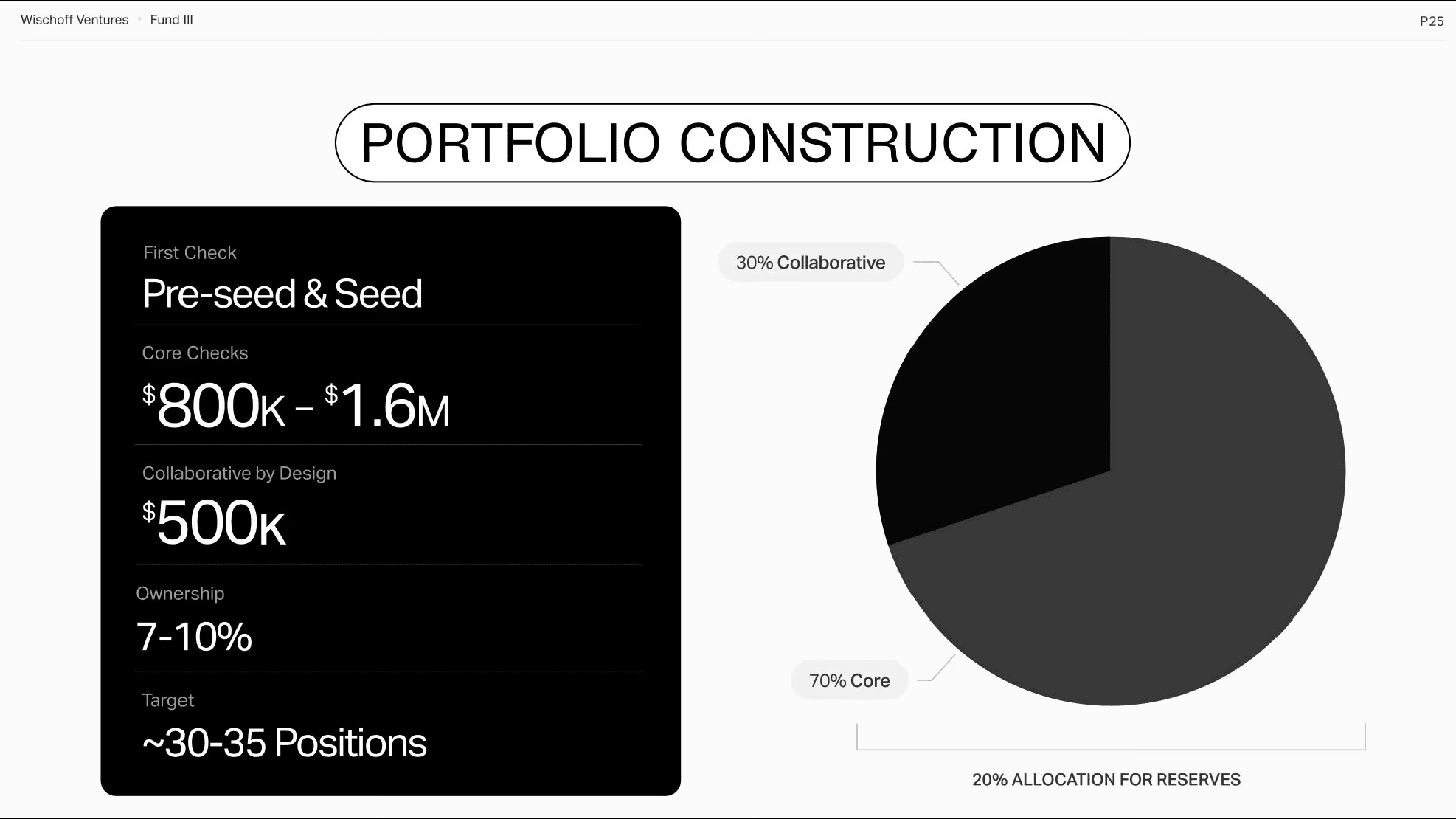
Fund 3 will invest $0.8-1.6m in 30 startups (fintech, logistics and manufacturing) targeting an ownership stake of 7-10%. That implies she expects valuations to be min $11.4m which was y-com SAFE prices in the good times.
Fund performance to date
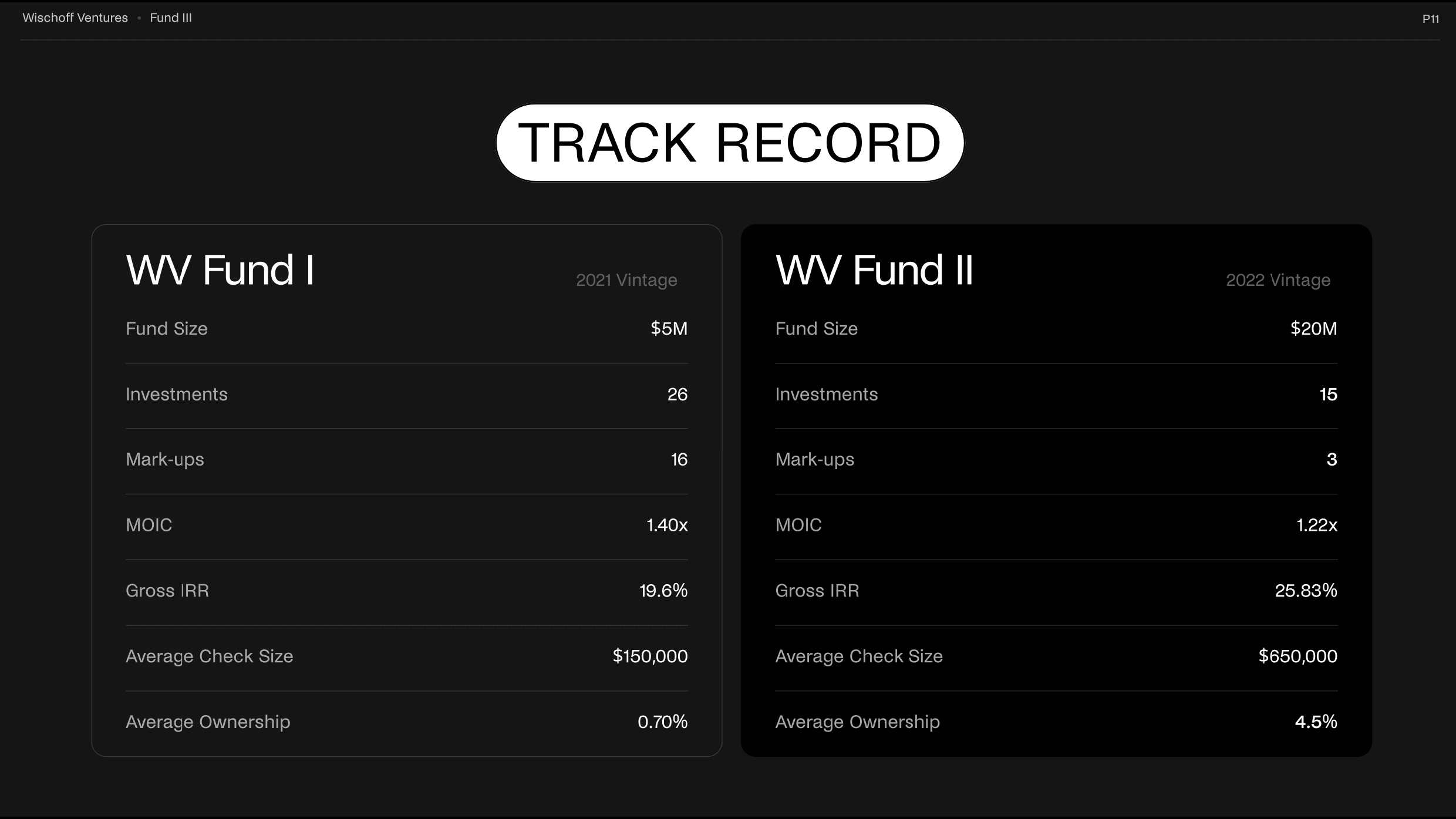
| Metric | WV Fund I (2021 Vintage) | WV Fund II (2022 Vintage) |
|---|---|---|
| Fund Size | $5m | $20m |
| Investments | 26 | 15 |
| Mark-ups | 16 | 3 |
| MOIC | 1.40x | 1.22x |
| Gross IRR | 19.6% | 25.83% |
| Average Check Size | $150k | $650k |
| Average Ownership | 0.70% | 4.5% |
Wischoff Ventures Pitch Deck
The full PDF pitch deck on the fund 3.
Videos from Wischoff
Here are 3 videos from Nichole on the fund.
Wischoff Ventures $50m Fund III Announcement
From Food Stamps to $20 Million VC Fund with Nichole Wischoff
Intro video to Wischoff Ventures
Slide deck review on Wischoff Ventures fund 3 deck
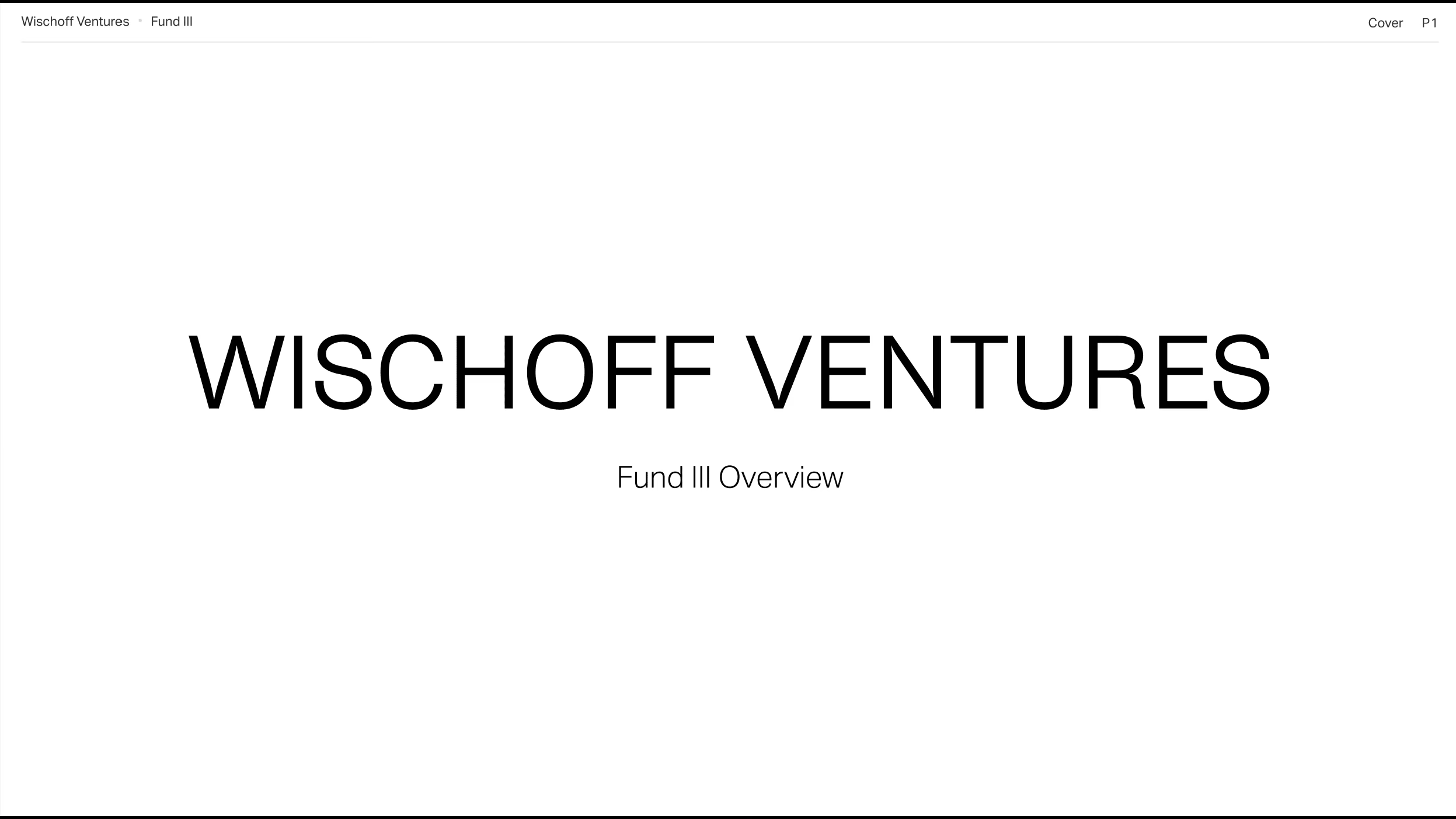
Cover slide is fine. I would use logo to incorporate branding.
On admin, page numbers are in the top right? Why?
- Why does the number have a prefix of “P”? It is not needed
- The page number should always be in the bottom right
“Fund 3 overview” makes me think that this deck is not the real deck, but maybe a full teaser and there is other material. If this isn’t the case, I would be more definitive and just state it’s the funds 3 deck.
I rarely say this, but there is no reason that some design could be incorporated, such as color, or an image. Whilst this is superfluous, I feel the deck is spartan.
All decks should start with what I call a “one liner”. Explain your fund briefly so LPs know what they are getting.
Understand if you are raising from institutional funds, or anyone with more than one person, everyone other than the person you are engaging needs to get onboard. Designing your deck so “other stakeholders” can read your deck and ‘get the deal’ is smart.
There is no need to aggressively highlight “relentless”. It means nothing (and why is the R capitalised?). It imbues a vibe you are looking for the hustlers, but what founder with the potential to succeed isn’t? To add, writing an adjective “high growth” is futile as that’s what fundable startups are a prior, right?
I would cut the description to what matters. Half of the text could be removed and provide an opportunity to explain how alpha is generated.
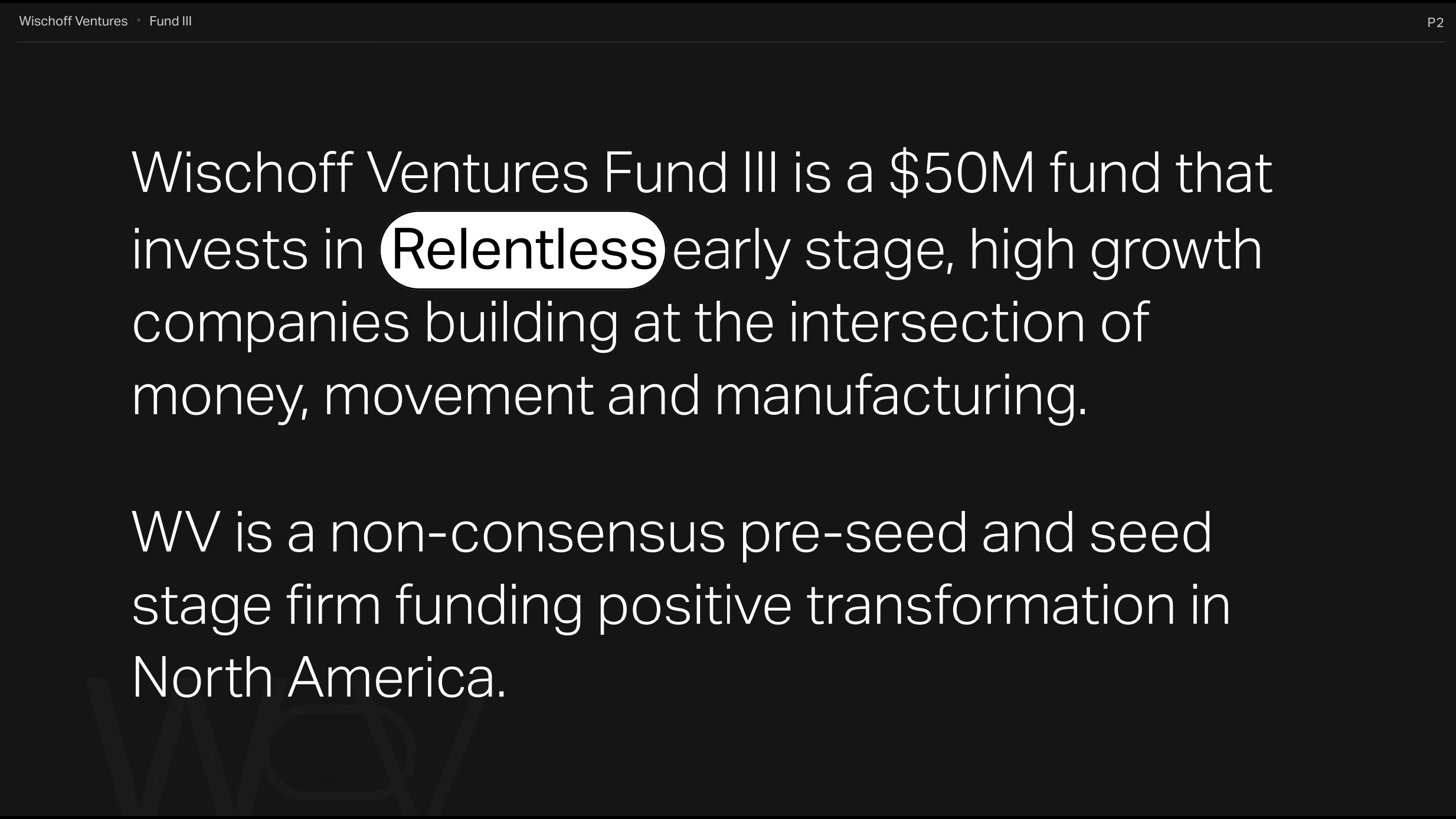
In the top left, “wischoff ventures” text should just be the logo and placed in the bottom left (in line with the page number).
There is no need to write “Fund III” at all. Anything extra on slides increases cognitive load.
To address slide structure, headers are the most important thing. I want consistency and descriptions.
“Meet out team” should be “Single GP with 26% gross IRR generated in fund 2”. Typically there is more than one GP so the header is normally about cohesiveness in decision making.
Writing “meet our team” is a missed opportunity to sell… as will be every proceeding slide.
The general structure of the slide is solid (logo, data, very brief description).
I would probably put the hiring part as a row at the bottom and maybe allude to the fact there are people in pipeline.
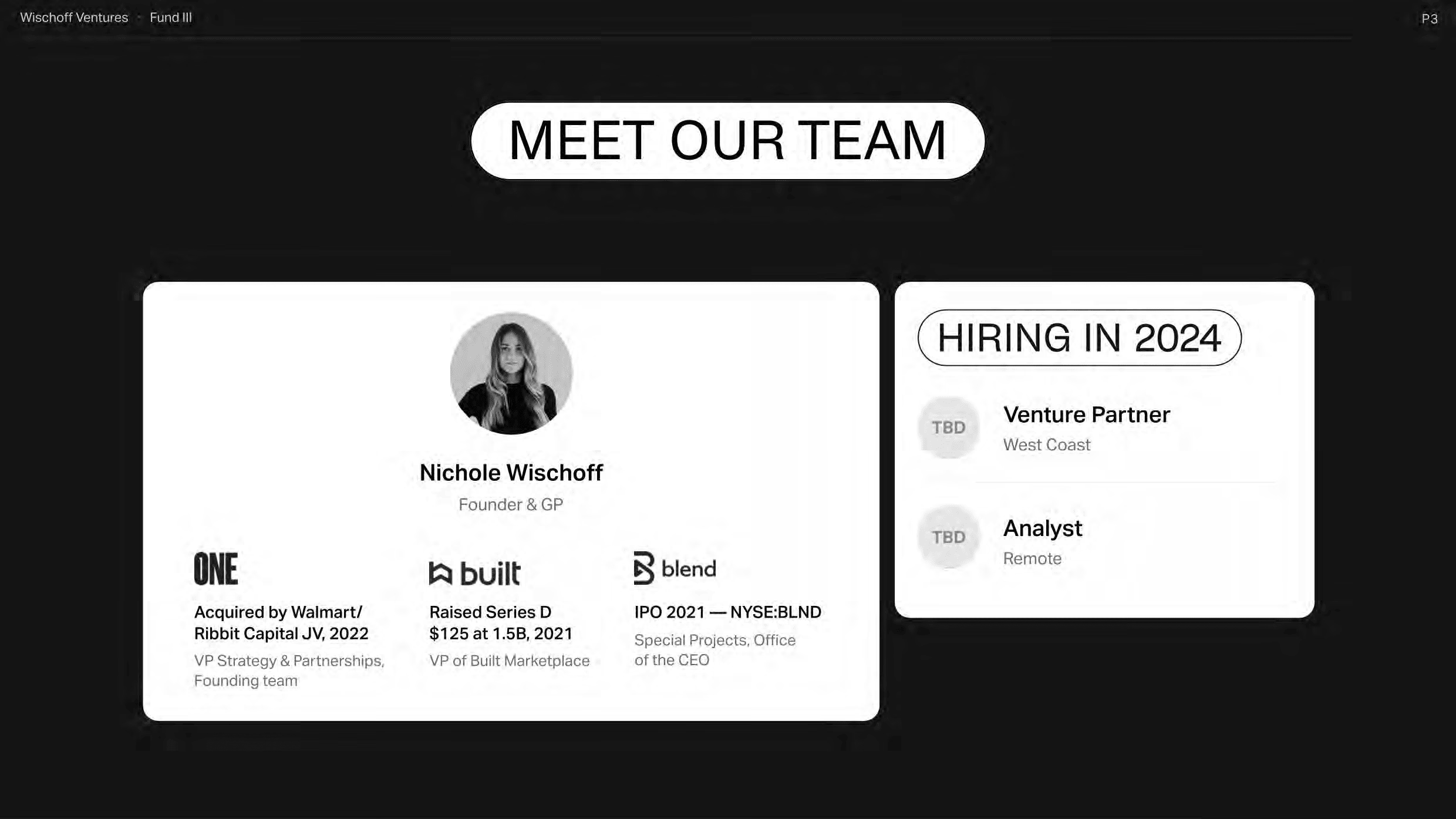
The title is insipid. Where is what- the portcos? One can easily add the nominal location (I think she is remote, or at least flexible on location?).
I would deal with location of portco on a slide with other portco data.

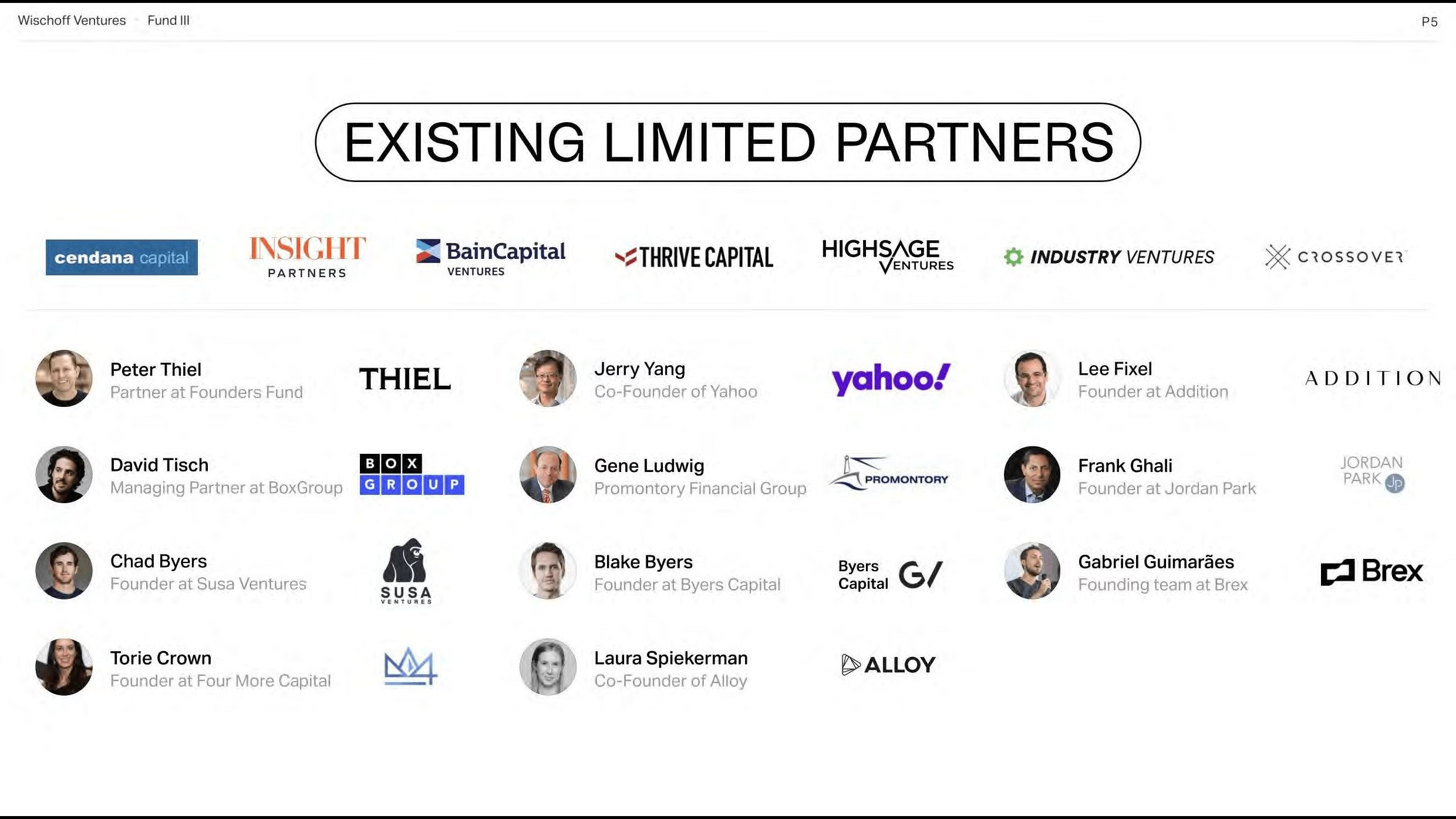
Nichole has got awesome LPs so this is the single strongest slide one can have in a deck. The slide is close to ideal (Though the header can be improved, and there is the op to cover the cornerstone (lead) and commitments to date (But can be done at end of deck too)).
Potentially (everything depends), I would put this slide after the “one pager”, but then I would have the “team” slide before it. So it would be intro, team, then LPs. Then I would follow my approach to start with inv thesis etc.
This slide has the foundation of being useful but fails.
Don’t make charts with vertical text to start. No one wants to turn their neck to attempt to read. There are more than 7 data points, which is too many. The “GDP drivers” list should be cut down (and the title can be improved).
The 4 points on the side are too minimal. Don’t expert to have to explain everything in person. What does “money” mean?
This is the VC equivalent of a startup stating irrelevant TAM numbers in their market sizing slide.
Can you read this slide in 5 seconds (What I term as “The Flick Test”) and know what the point is? No, you can’t.
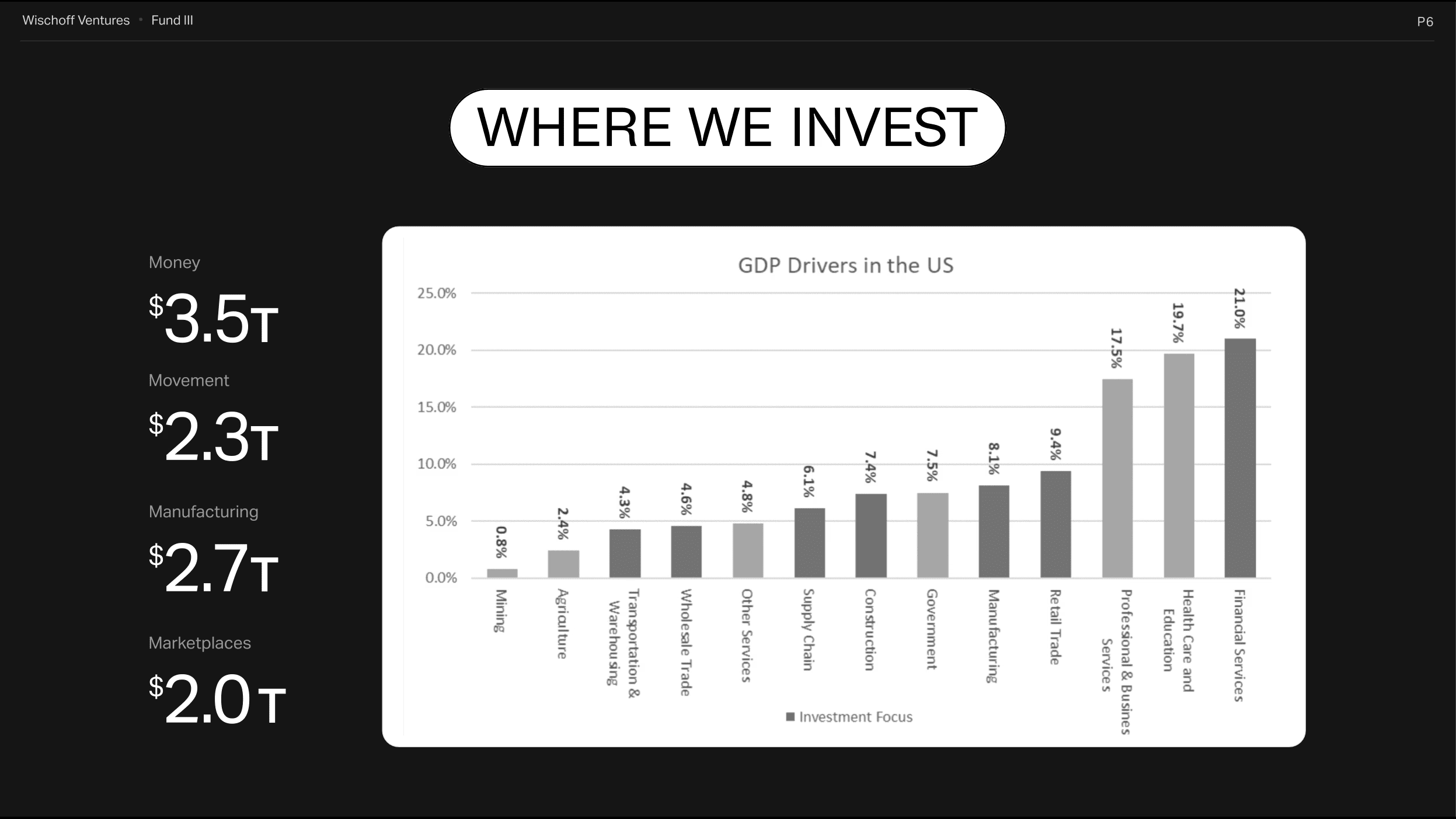
I hate CAPS.
The title could be “Our 16 investments to date fit within our 4 sector thesis” (or whatever, I’m writing stream of consciousness).
The category font size is out of whack. The category actually matters in the information communication hierarchy, but the size of market is ostensibly paramount.
Crucially, all 4 $TRILLION data points are not sourced.
As VCs roll their eyes seeing T (or even B), I would expect LPs to do so similarly.
The slide structure or thought is correct though. This is a typical VC slide.
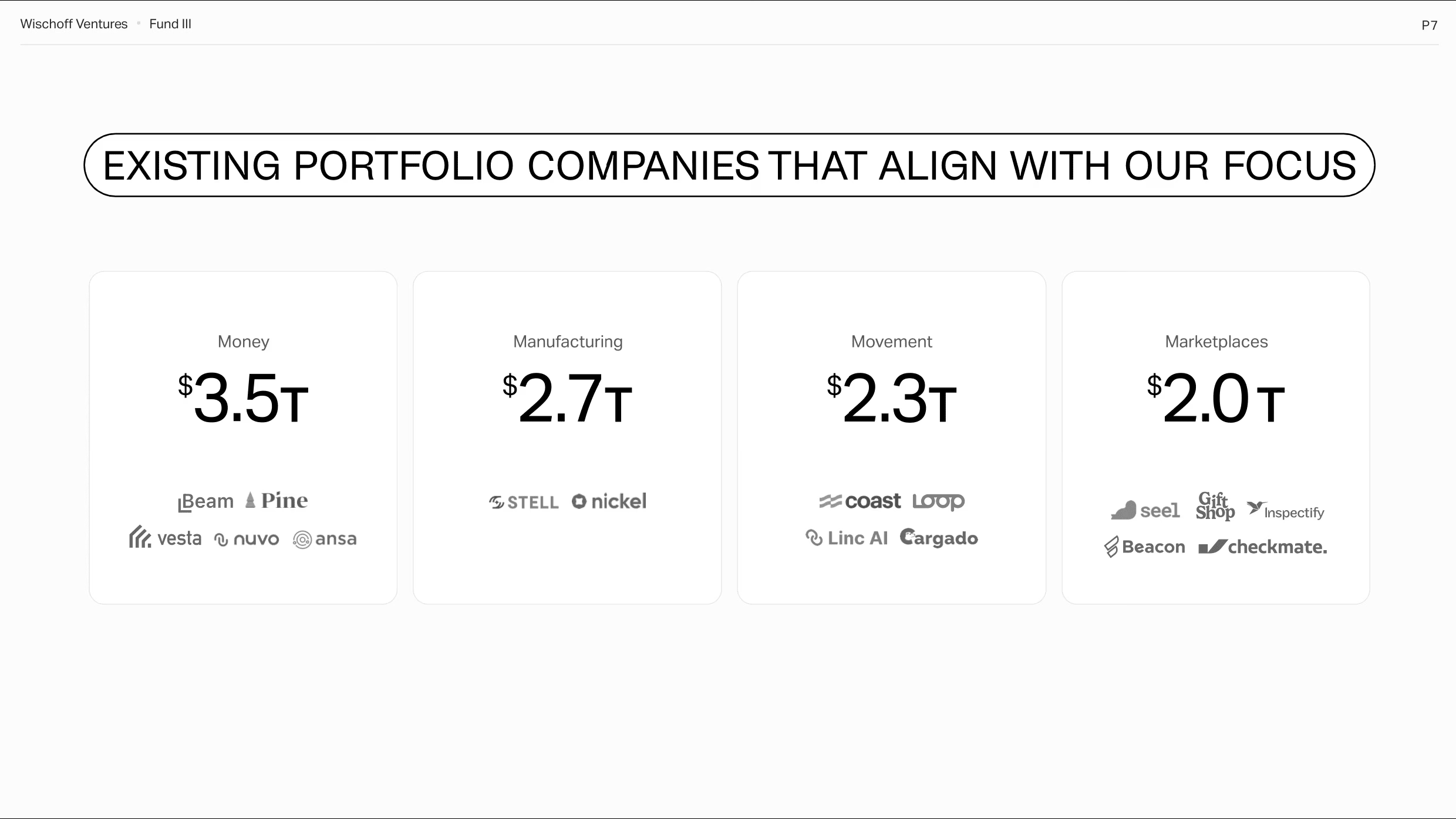
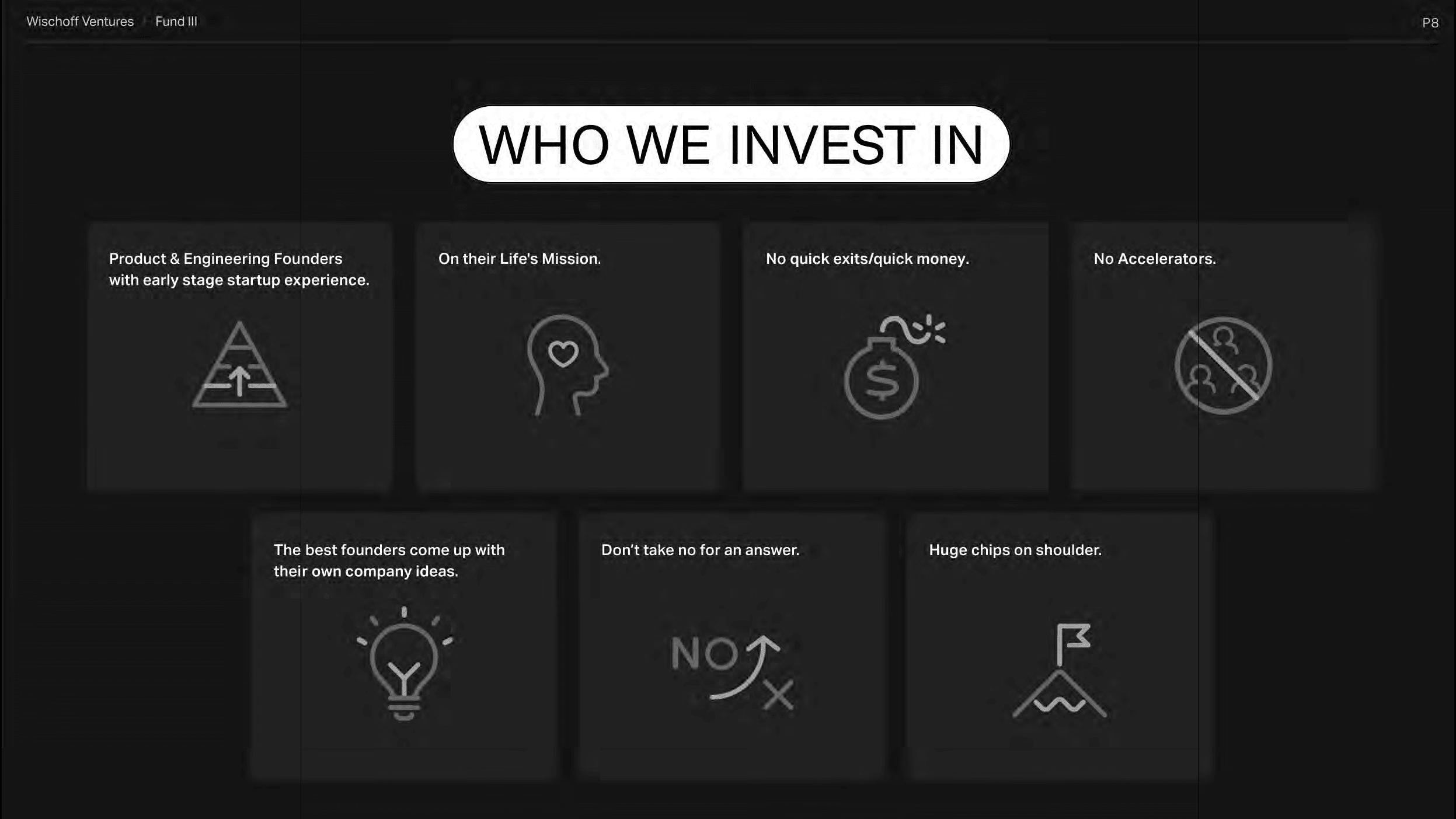
The title can be descriptive (as usual).
I’m between whether slides should add logic (more text) or not. In one regard, the slide is fine, but from another paradigm why “no accelerators” would be explained briefly.
I abhor interstitial slides in decks. There is no reason to have them in your initial deck (You need when you are making a DD type presentation!).
Don’t add pointless slides:
- It’s another slide to tab down
- It’s a waste of paper if printed
Header is lame again.
The table fund returns is great in theory, but the lines are slective.
On the design front, the grey scale inhibits legibility. I frankly prefer to be consistent with white slides (Be boring so it’s easy to read).
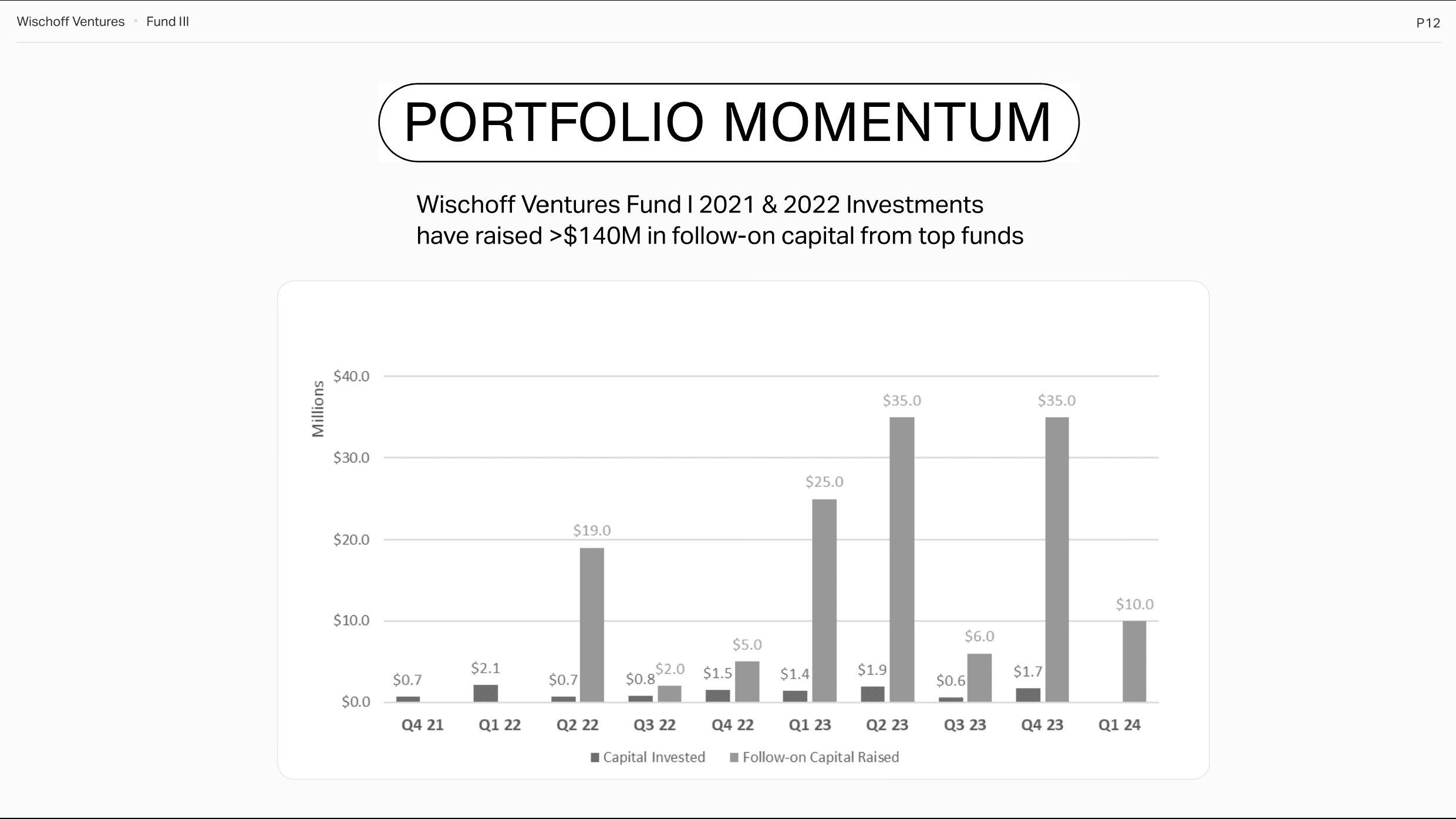
What does “portfolio momentum” mean? Why not write “85% of portcos have raised as S-A, totalling $140m.” Then add logos of who did the follow-ons?
I don’t understand the point of the chat at all. There is no evident link between time of investment and follow-on. Frankly, this slide wold be better served by showing a table of the startups with pertinent data points.
To nit pick, why write “Wichoff Ventures”? Superfluous text on slide. I’m making the point that you need to review slides and slash.
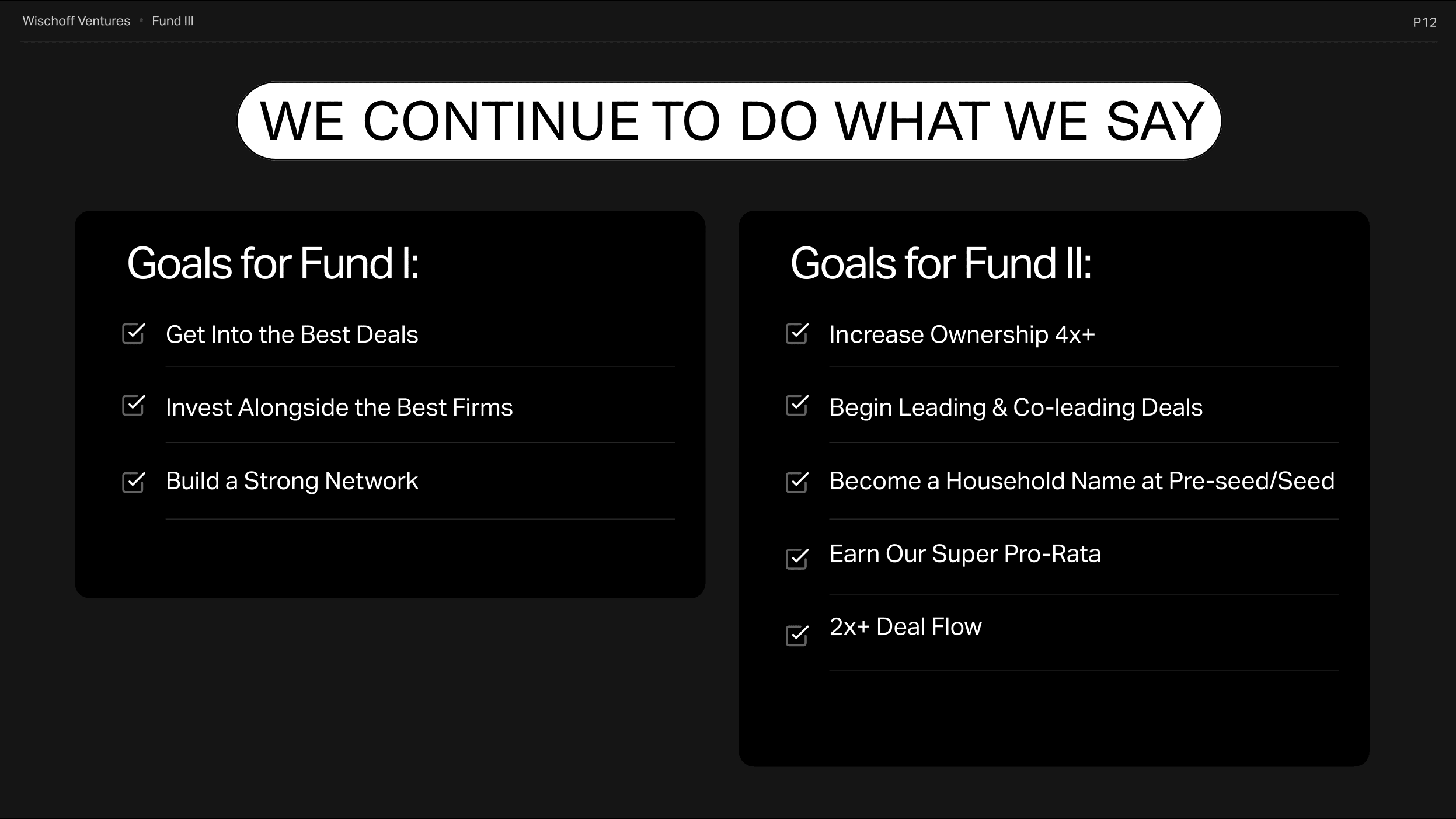
Why is the text in Proper Case (Each first letter of a word in cap)?
There is a declaration of delivering but no evidence. It would be better to make a statement and prove it (logos or quantifiable data points ideally).
There is no way to prove best deals and firms at this fund stage (more so size and duration), so adding logos or similar would be an easy way to ameliorate.
Perhaps, Nichole intends to talk to this slide, but I prefer to make a deck and the slides therein self-evident.
Writing “we continue to do what we say” inbues the slide with an expectation to deliver that I personally wouldn’t want to aspire too… I mean, did she get one “super pro-rata”… in a competitive deal where the founder carved out a space for her against a heavy S-A VC? This is the stuff that carries weight.
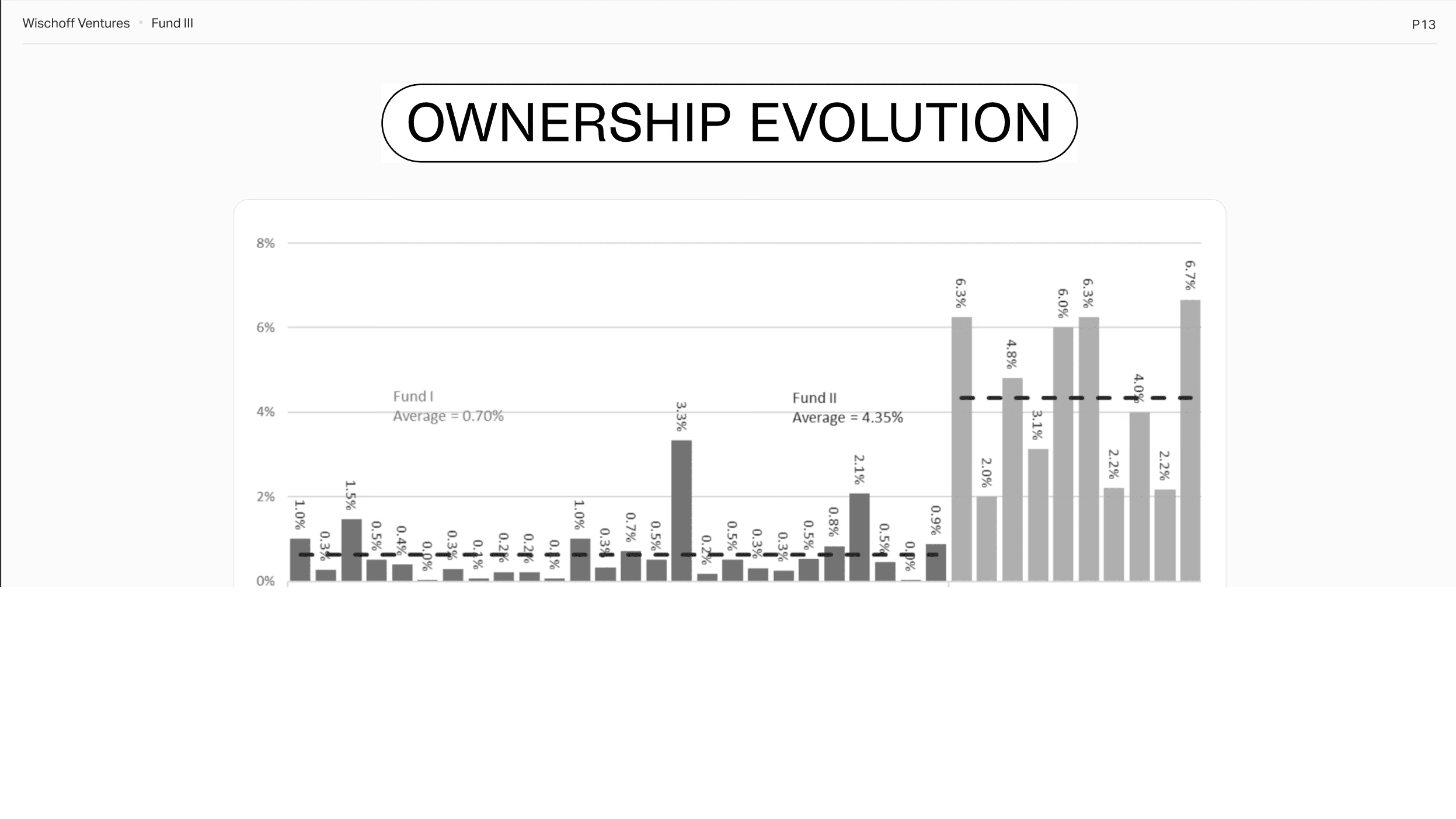
I can only assume this slide is redacted as it’s messy. The x-axis is missing.
Without the x-axis, I can already tell the slide is poorly made. I’ve not made nor seen a GP deck that gets into this sort of detail anyway.
i don’t think this is how a point should be made, and frankly, it’s likely data that could be provided on request.
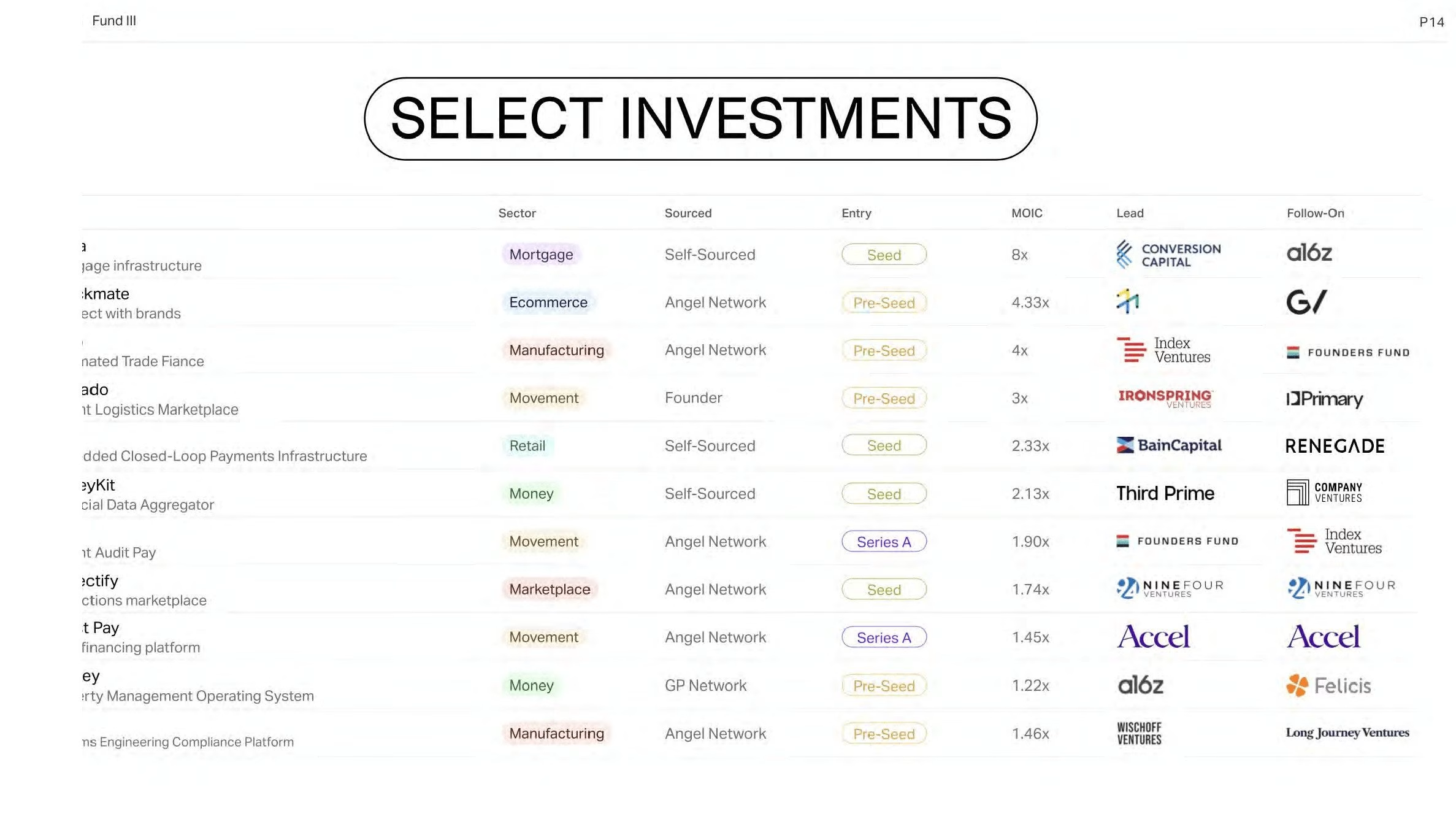
The slide has sort of been redacted by half taking off the names of companies (So frankly it’s easy to interpolate names if one is inclined).
This slide sort of looks like it was pasted from Airtable?
In theory, this slide is good, but then why were other slides included if this slide was properly structured? Frankly, slides need to make a singular and compelling point. The lack of use of headers obfuscates this.
Nichole added on Twitter (Where I found the slides) “Had three case study slides but sharing one“.
I have to assume this is a case study slide? It’s not obvious and it is only so because i say the comment…
Slide structure is a disaster tbh. There are no meaningful specifics on deliverables and results other than at S-A.
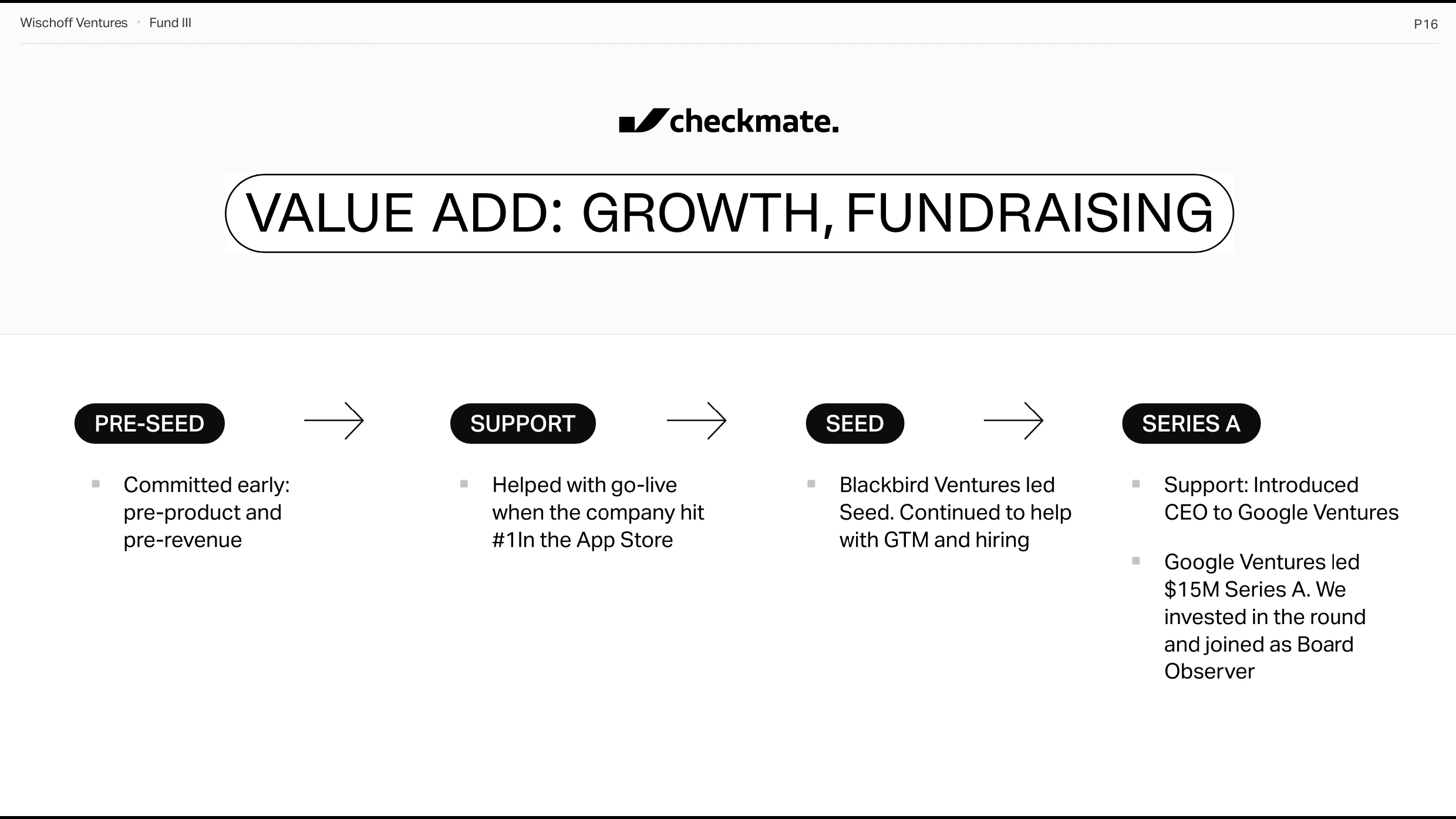
What does “how we see” mean? Oh there is a super grey on dark grey text which says “access”…I have a blog on why not to hire designers for pitch decks.
I’m guessing this slide is “deal sourcing”. Most VC decks suck at doing this slide, so assuming it was obvious it was a deal sourcing slide, the content is better than most. It can be done a lot better though. It’s frankly that not that much more work, but the design is also cramming a structure and not allowing freedom to communicate post hoc.
I think the slide order of the deck is wrong.
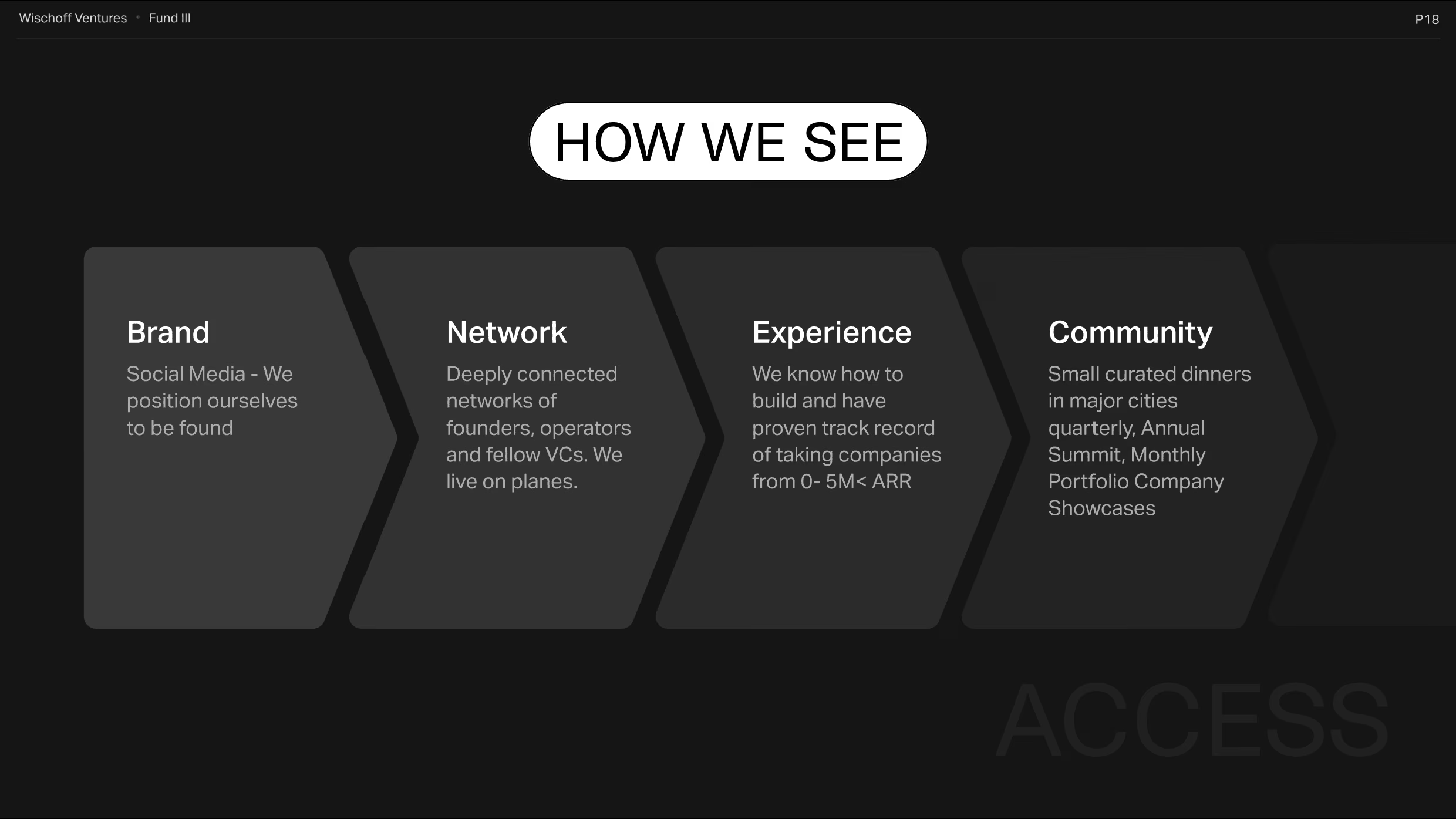
Coinvestment is a typical slide VC funds include before they have a brand and a notable, quantifiable track record which speaks for itself (though takes time).
I would likely concatenate this point on a grid slide in a sub-header.
If using this slide, I would include some specifics such as the logos of the co-investment.
I know how to do VC decks so it’s easy for me to nit-pick on details or opine neg vibes on the bigger picture of the deck. But for a simple deck, she’s doing better than most. I appreciate that she restrains herself and can be focused on points to make (even if not explained in the header!). It’s super hard to focus in slides!
She hired a designer to do the deck and the grey scale choice is a mistake.
It’s hard to read the chart (and to know what the point is!).
To be a nerd, I would not just paste in a chart.
- Remove the slide title (trans summary)
- The inbound and outbound is added in PPT and makes no sense
- Remove background and format natively (then add colours)
- Make y-axis titles horizontal
- What does “%see “invest” even mean?
- I’m not being paid millions to work on a deal, but what is “%we invest in”? It’s so close to the x-axis it should probably be on a separate axis… but there are 2 axis already… it’s not a chart McKinsey would make.
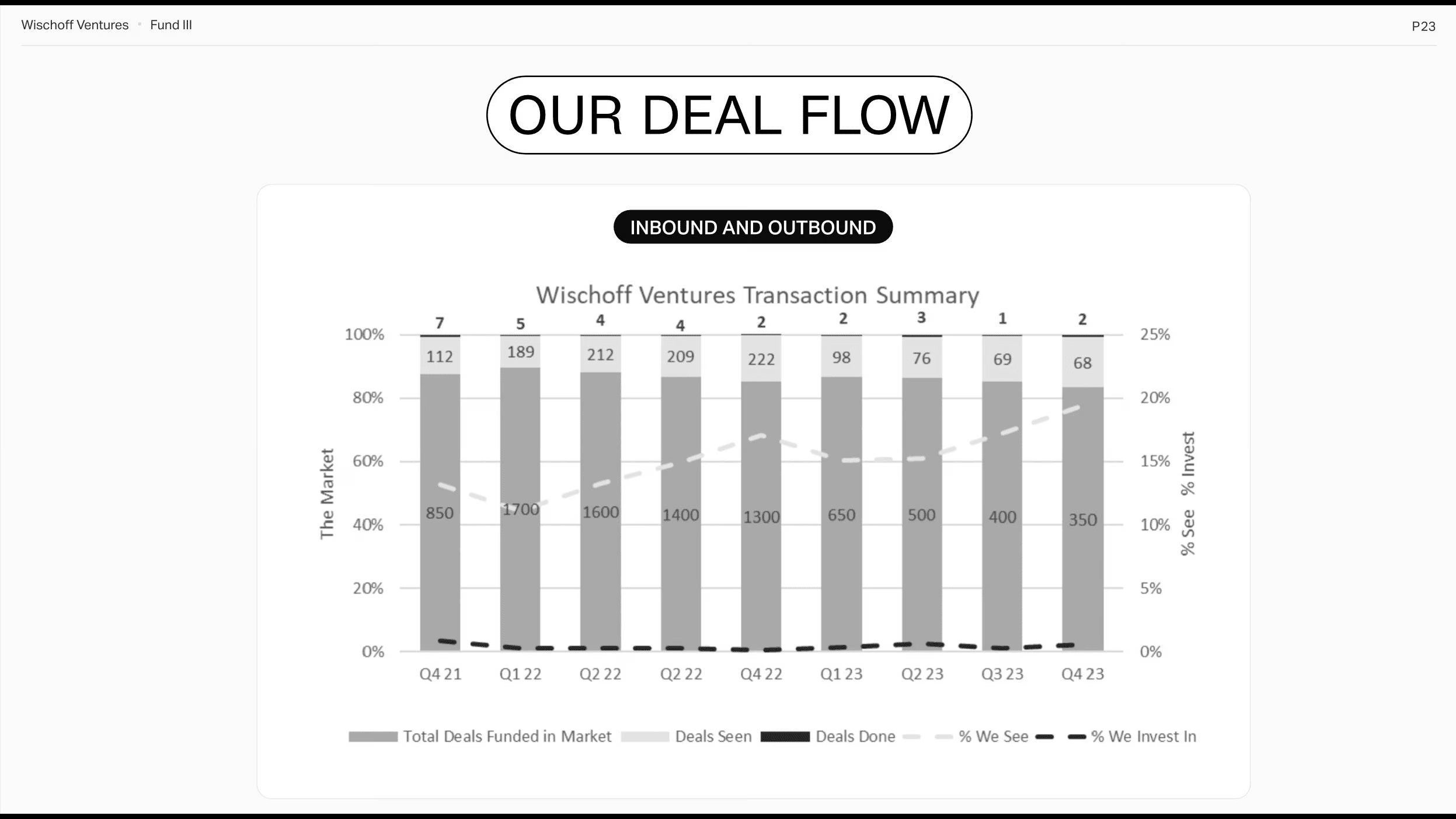
Slide is clipped on the right.
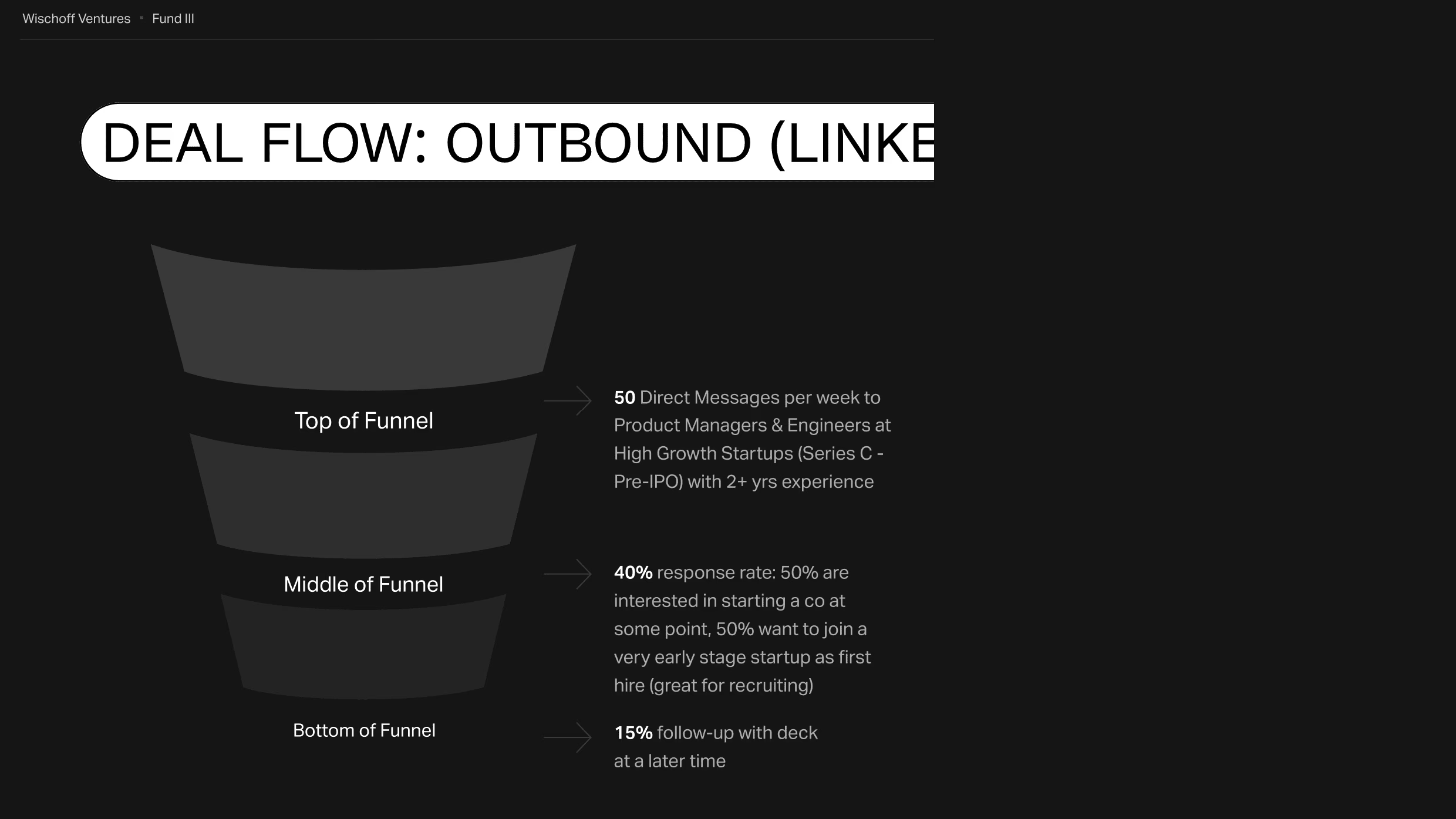
This is a deal sourcing slide and should be together with slide 18 (How we see).
This slide makes no sense, especially since 50 outbound a week is a joke. This is inherently scalable if it is meant to be an acquisiont channel of deals…
Superlatives such as “massive” are better quantified.
She mentions social media, but not the followers. Seems a strange time to obfuscate?
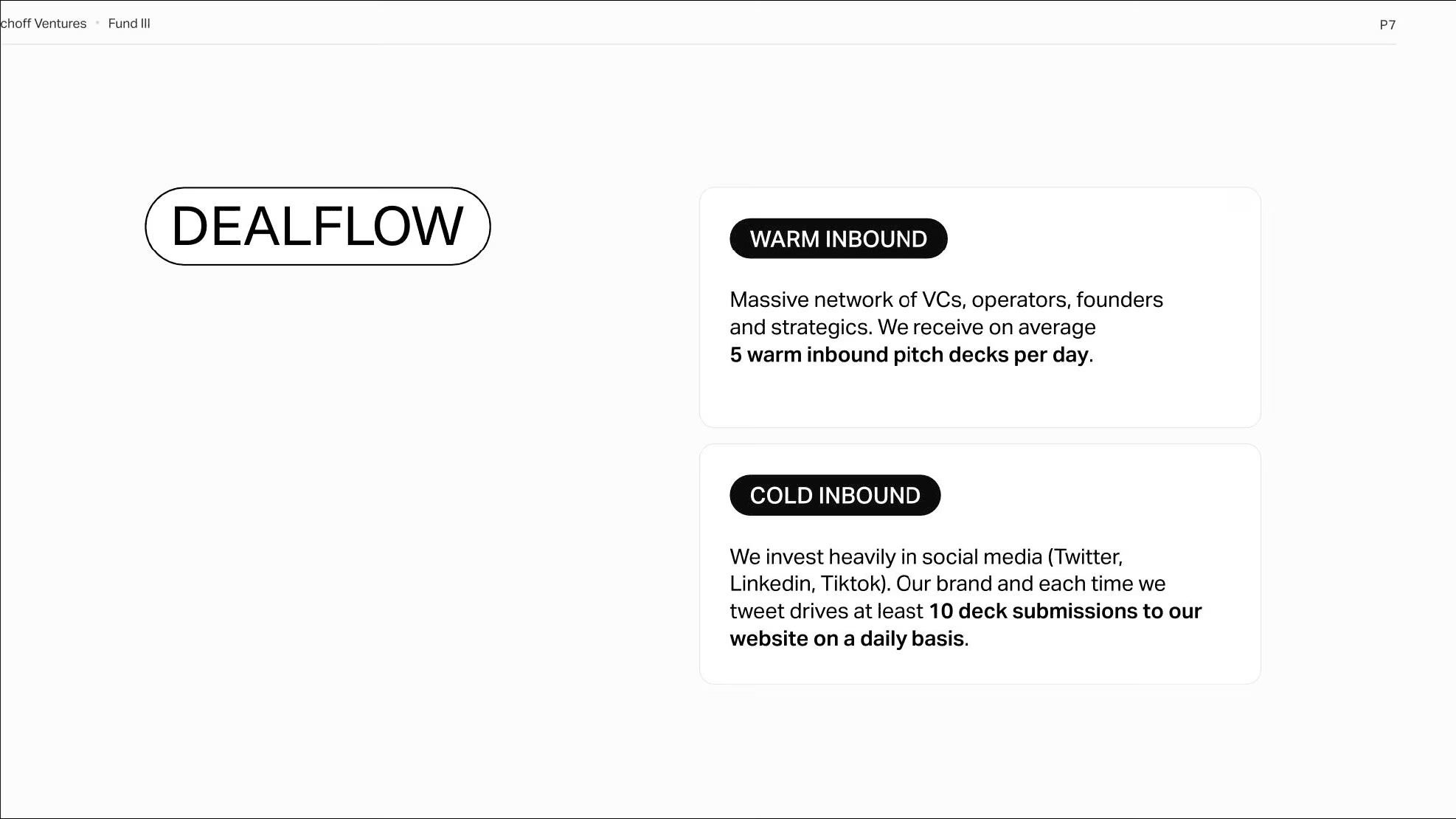
There shouldn’t be this many deal-sourcing slides. There should be a slide on “value add” instead.
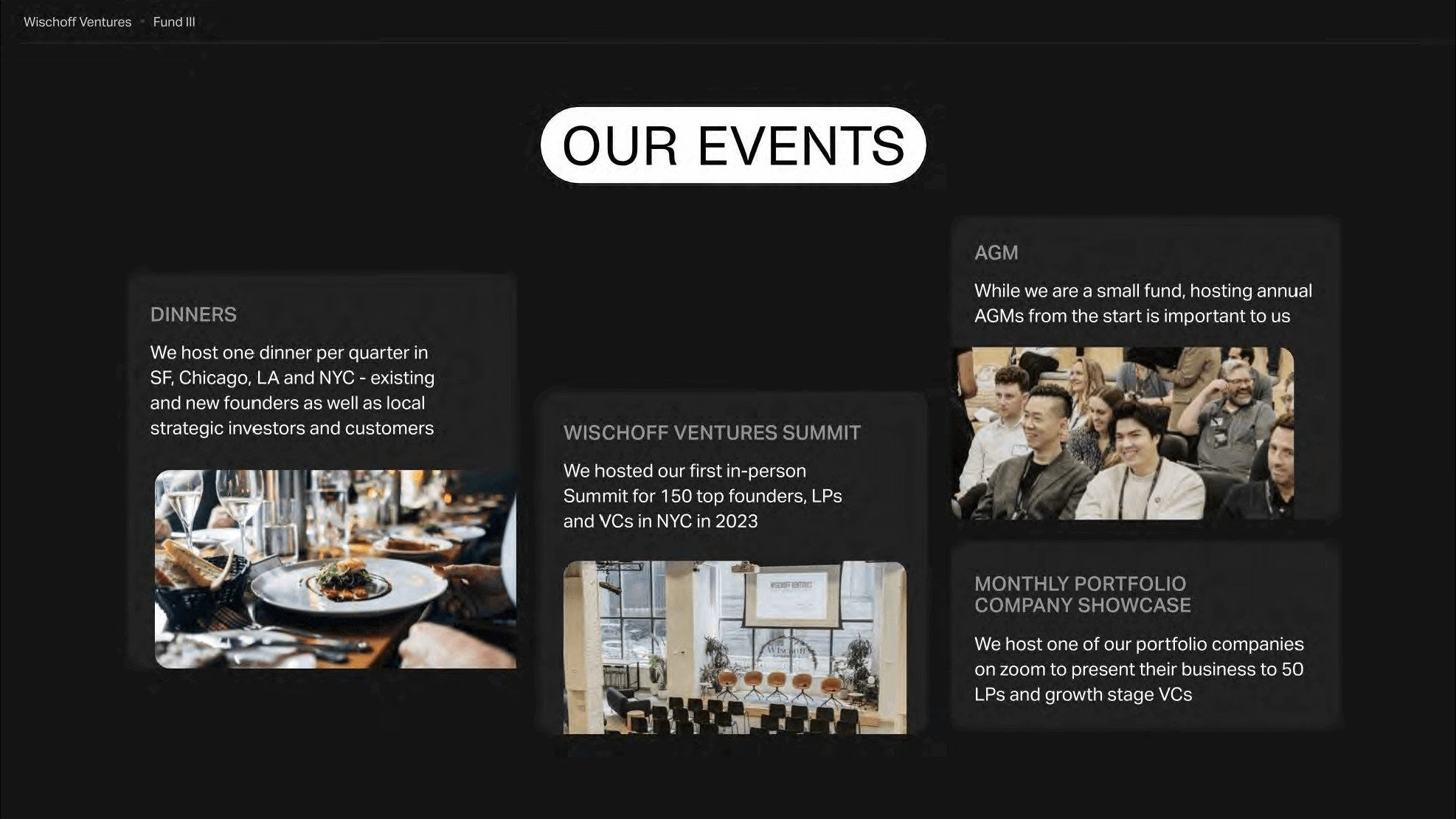
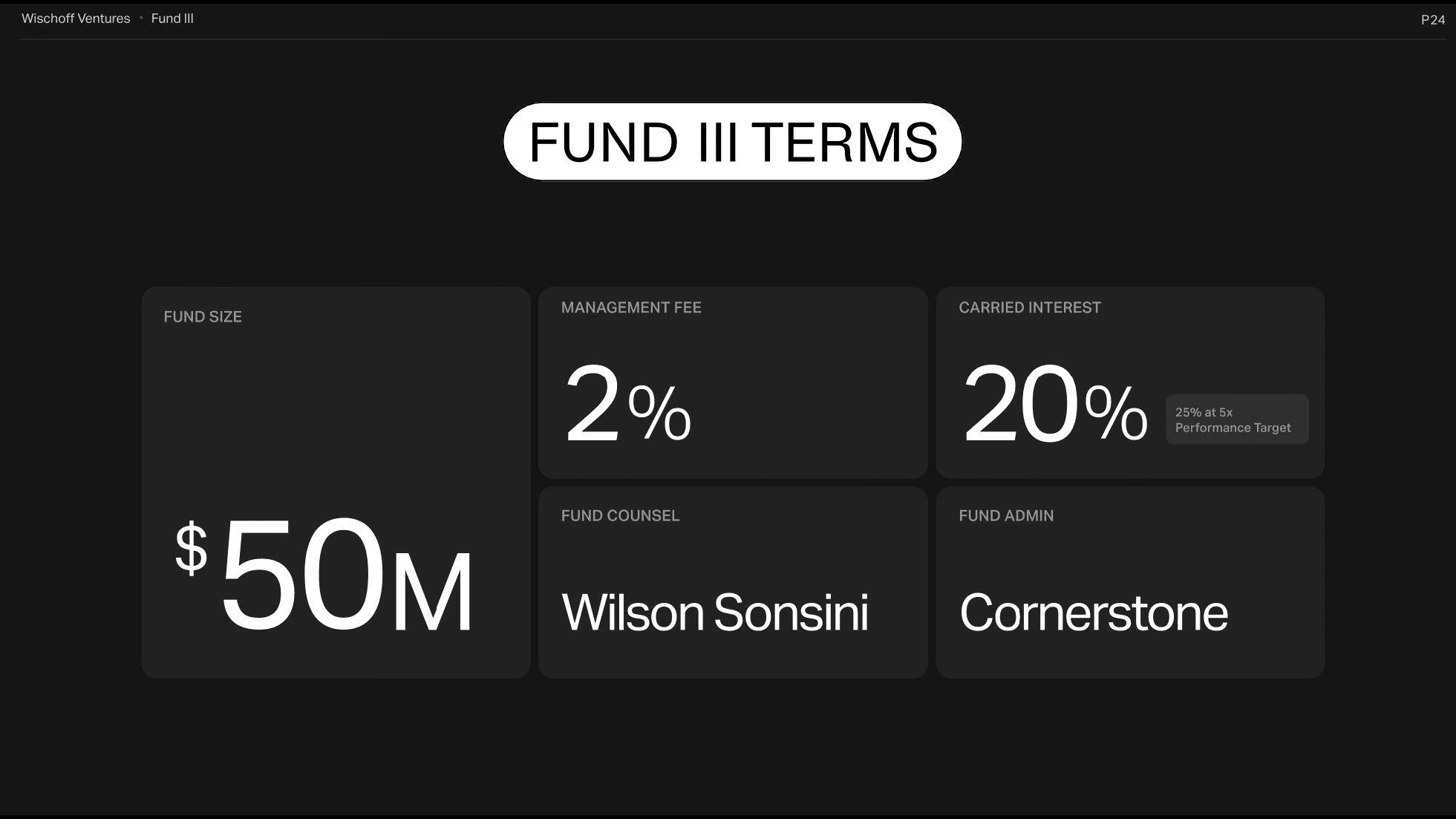
There is a standard fund terms slide that should be in the deck and it’s dry. This is “captain obvious reporting for duty” and two brand names (i.e. trust me).
There is also a tiny-ass “25% PF at 5x” which is designed bizarrely. I mean either state all the heads of terms in a slide, or don’t? Why add the PF uplift on the slide if not cover details, if so, why not use footnotes? At a $50m raise people expect a slide structure and footnotes are fine.
This isn’t a proper portfolio constructtion slide. It’s confused between the investment mandate, plan and construction.
“Collaborative” and “core” are not normal terms. I am guessing they mean “non-lead” and whatever “core” means, which wasn’t defined.
I close decks differently, but this isn’t the true deck used, so who knows.
Blog worth reading
Nichole Wischoff wrote a blog on raising for her first fund that you might like to check out?
Transitioning from operating to investing as a Solo GP
It wasn’t obvious to me at the time when I made my first angel investment in 2020 that this would be my future. I was approaching year six working with CEO/co-founders scaling early stage companies. I was at my third startup. After close to two years at each company I longed for the earliest stages again. Zero to one. Pure chaos and ambiguity. Less than 100 people. Maybe even 10 people. I knew I couldn’t keep starting over every two years. I knew I didn’t want to be a startup CEO. Having had a front row seat to what that really looked like, a lot changes over 10+ years. The short of it is that I never wanted to manage 1,000+ people or be the CEO of a public company. I have admittedly never met a single builder who does. I was at a fork in the road.
I was always enamored with venture capital. I was a part of fundraising roughly $300MM+ between Blend, One Finance and Built. I did my tour of duty on Sand Hill Road. Received several rejections. Sat through terribly boring board meetings. Asked myself on a regular basis what VCs really knew about startups and why on Earth were they so entitled. In the spring of 2020 after leaving One, I purchased The Business of Venture Capital. It was the first time it ever occurred to me that VCs also fundraise, also get rejected and are working for a very long list of Limited Partners (LPs).
In 2020, one of my best friends left Blend to start a company. He asked if I wanted to invest. I decided to set aside a chunk of cash to invest in 2020 and was determined to learn the ropes of getting in front of founders and getting allocation early on. I thought this would be a very difficult task. I let several people know in my network that I was angel investing and the floodgates opened. I deployed all of my personal money in a few short months in four great companies. I was very much still operating at the time and didn’t give investing much thought when I ran out of personal capital to deploy. I kept helping founders without allocation and didn’t advise because of the time commitment.
In early 2021 I received a call from a partner at a venture firm that was on the board of one of the companies I worked for. Blend had just gone public. One Finance which I was on the founding team of had just raised a Series B (it has since sold to the Walmart/Ribbit Capital JV). Built was on an absolute tear. My angel investments were all marked up. “Nichole, you are a great picker of companies to work for and your angel investments are solid. Have you ever considered raising a fund? We would love to give you a chunk of cash to do so.” I told him I would give it some thought. Scouting never appealed to be. I didn’t want to represent a single firm/brand. Raising a fund was interesting.
I reached out to a handful of VCs that I deeply respect and asked for their advice. I had no idea how to structure a fund, what the time commitment would be or anything related to incorporating/setting it up. Every single one responded “go for it” and many invested along with offering great advice about fund structure.
To kick off the raise, I wrote up an email (no deck) with the below outlined and sent this around to my network (redacted quite a bit as many companies are in stealth and out of respect for my LPs privacy):
About me: I am an operator (Blend/Built/One Finance) focused on supporting brilliant and fearless founders and bringing their whiteboard dreams to life. Etc, etc.
Angel investments: 4.46x MOIC
- Vesta (seed) (mortgage infra/LOS) Conversion Cap led seed – a16z led Series A
- Pine (seed) (Rocket of Canada) Greylock led seed – Greylock led Series A
- Nuvo (seed) – (b2b, credit analytics) Index led pre-seed – Founders Fund led Seed
- Trustlayer (seed) – (plaid for insurance) Propel led seed – Craft Ventures led A
The fund: $4-5M, seed/Series A, largely focused on fintech and proptech. Check sizes between 50-250k. No reserves for follow-ons. US based.
Fund investments:
- Full list- Current LPs:
- Full list
Within a few months, I was staring at 10M committed and promised two anchor LPs that I wouldn’t raise more than 5M. I capped the fund at 5M and used AngelList for everything end to end. I raised from a total of 31 LPs. A handful represented the majority and left room for smaller checks from founders/operators.
No one asked about portfolio construction (more to come in this). I learned very quickly that for a 5M fund it was about access and allocation and proving that you can get into great deals. No one cared about the fund thesis either. While I said I would focus on fintech and proptech, I took every single call. I talked to healthcare tech founders, climate tech founders, web3 founders, etc and quickly learned that a lack of focus would crush me. While building a track record I needed to focus where I knew I was strong and well versed. Even saying that you invest in fintech is incredibly broad.
My check sizes started off small. Having never personally written over 50k into a company at the time, I had a tiny bit of stage fright. I remember getting 250k in allocation in a pre-seed stage company which was the first investment in Fund I and felt so sick over a check that size that I told the founder to cut me down to 100k. I laugh now when I think about how ridiculous that was. I have a few great mentors that happen to be repeat Midas List investors that don’t shy away from offering direct feedback. “Have strong conviction, maker fewer investments and concentrate in your winners”. My average check size went from 75k in the first quarter of the fund to 250k.
I knew within days of investing from Fund I that this is what I was meant to do. Sure, it sounds cliche, but it is true. This was it. This is how I take my pure zero to one execution DNA working with founders and work full time at the earliest stages.
The fund even at 5M would easily become a distraction and I had a duty to the company I was working for. I am not built to split my time between two full-time jobs. I made an easy decision to transition to investing full time. I was okay with going from being a known-quantity in start-up world to a no one in venture capital. Several notable firms asked me to consider joining as a partner as I was communicating my decision to go the solo GP route. The truth is that I really wanted to see what I was made of on my own.
In March 2022, I left the operating in start-up world for a new kind of operating as a founding and solo GP at Wischoff Ventures. While I most certainly have very hard days where I wonder what in the hell I was thinking not going in-house to learn the ropes, I wouldn’t change a thing. All for failing and learning quickly. I get to spend all of my time with some of the most brilliant people in the world.
More to come on firm building, LP updates, future funds, detailed investment memos, etc.
Supporting reading
- How Nichole Wischoff Won The Internet To Raise $50 Million For Her VC Firm
- Nichole Wischoff Raises $50 Million for Wischoff Ventures’ Third Fund
Deck collection
You can see all the other venture capital pitch decks in this collection by smacking the button below:




Comments (0)
There are no comments yet :(