

Key features in the basic marketplace financial model
Model key features
If you want to quickly understand what is in the basic marketplace model, here are all the sheets and a brief explanation so you know what is in the model.

- Fully integrated model: Changes in one sheet flow through the whole model automatically
- Logical flow: Registrations, conversions and revenue are all segmented so they connect logically
- P&Ls: Actuals and forecasts have their own P&Ls. These are then combined into a ‘combined sheet’ so you can see the progress month to month
- Other: Charts and KPIs have their own sheets. The key data from the large calculation sheets are presented so you don’t have to dive into them
Turn on and off revenue streams

- Choose revenue streams: Pick the ways you make money and simply turn off the revenue streams you don’t use
3 revenue streams on the supply side

- 3 revenue streams built-in: Turn revenue streams on and off at a flick. Basic assumptions get you the results you need
- Transaction revenue: Normal stuff. You make money when transactions happen
- Member revenue: If you have members that pay each month, they are members
- Listing revenue: you charge suppliers to make listings. Normally for later-stage companies
5 revenue streams on the demand side

- 5 revenue streams built in: Turn revenue streams on and off at a flick. Basic assumptions get you the results you need
- Transaction revenue: Normal stuff. You make money when transactions happen
- Affiliate revenue: Some startups are pass through to other platforms.I allow you to do CPA and CPL on these. They add into GMV but you need to consider your model here as accounting can vary
- Member revenue: If you have members that pay each month, they are members
- Listing revenue: you charge suppliers to make listings. Normally for later-stage companies
- Ads: You make money from ads. You can be simple or detailed with assumptions around banner, interstitial, reward, offer wall, notification and native.
Simply forecast registrations

- Simple: I kept being asked to make simpler and faster ways to do forecasts so I made it in this model. Bare minimum, but what you need and no more
Convert registrations to customers
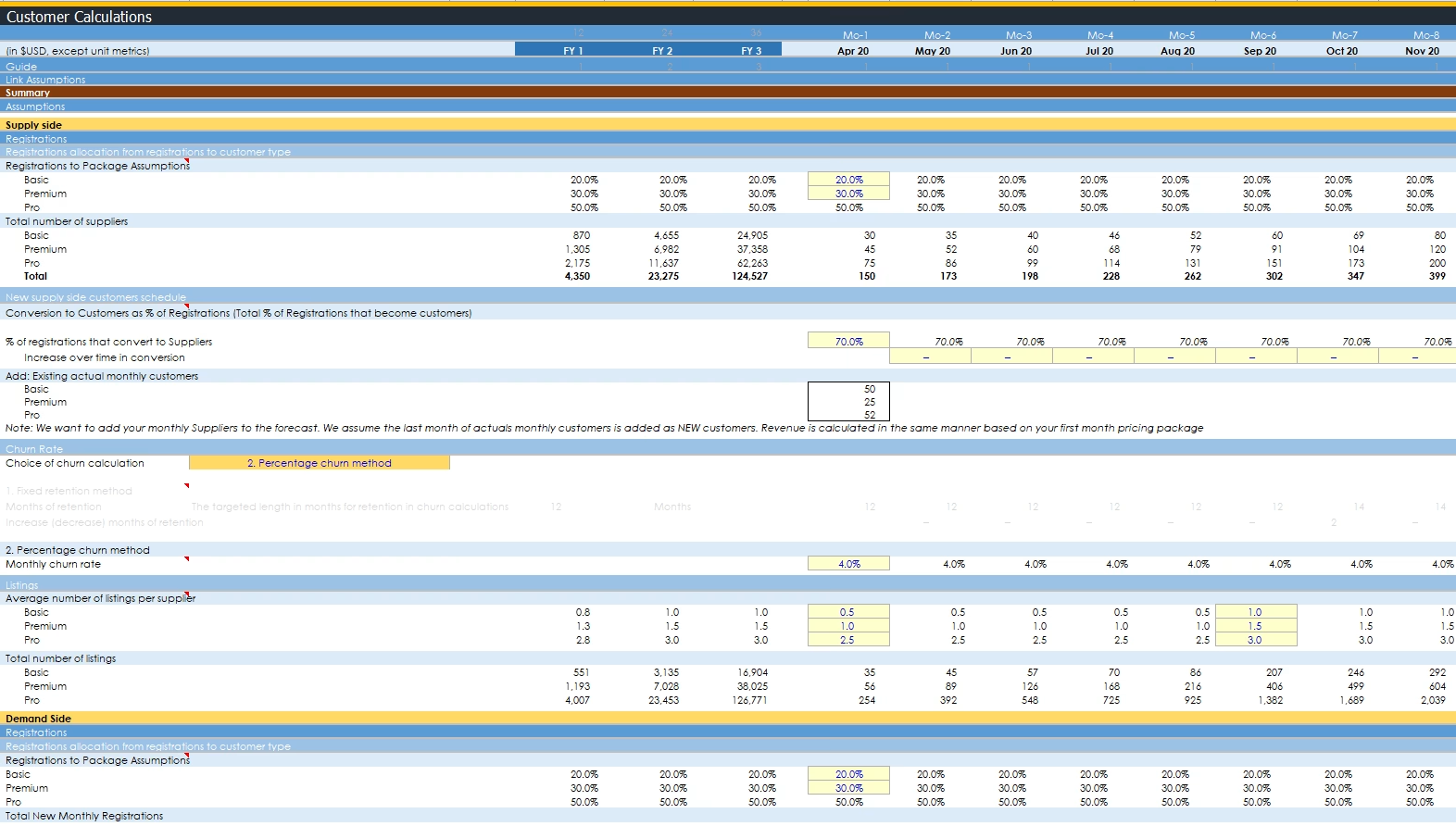
- Allocate registrations to 3 customer types: Create three avatars: basic, premium, and pro who have their own profiles
- Adoption curve: In this version, all registrations can convert to customers in the first month
- Churn: Two ways to calculate churn- 1/ month retention and 2/ % churn method
Detailed Profit and Loss statements

- 3 P&L sheets: Actual, forecast and combined
- Non key assumptions in line: If you want to add discounts, cancellations and bad debt, you can easily add in a percentage in line
- Fundraising: When you plan on raising money, you just input the amount into your cash balance
- Accounting and cash flow: Two main parts. The main part follows normal accounting practices, and tax is done simply (There is no sheet for Tax to manage advanced things like NOLs in this version). The bottom of the sheet converts accounting to operating cash flow so you know when money is actually going in and out
- Complex adjustments: Bonuses are paid on year-end in cash flow, but accrue in the P&L. Same for tax. Accrued bonuses from actuals are factored into your forecast for when they need to be paid
Simple staff and expense forecasting
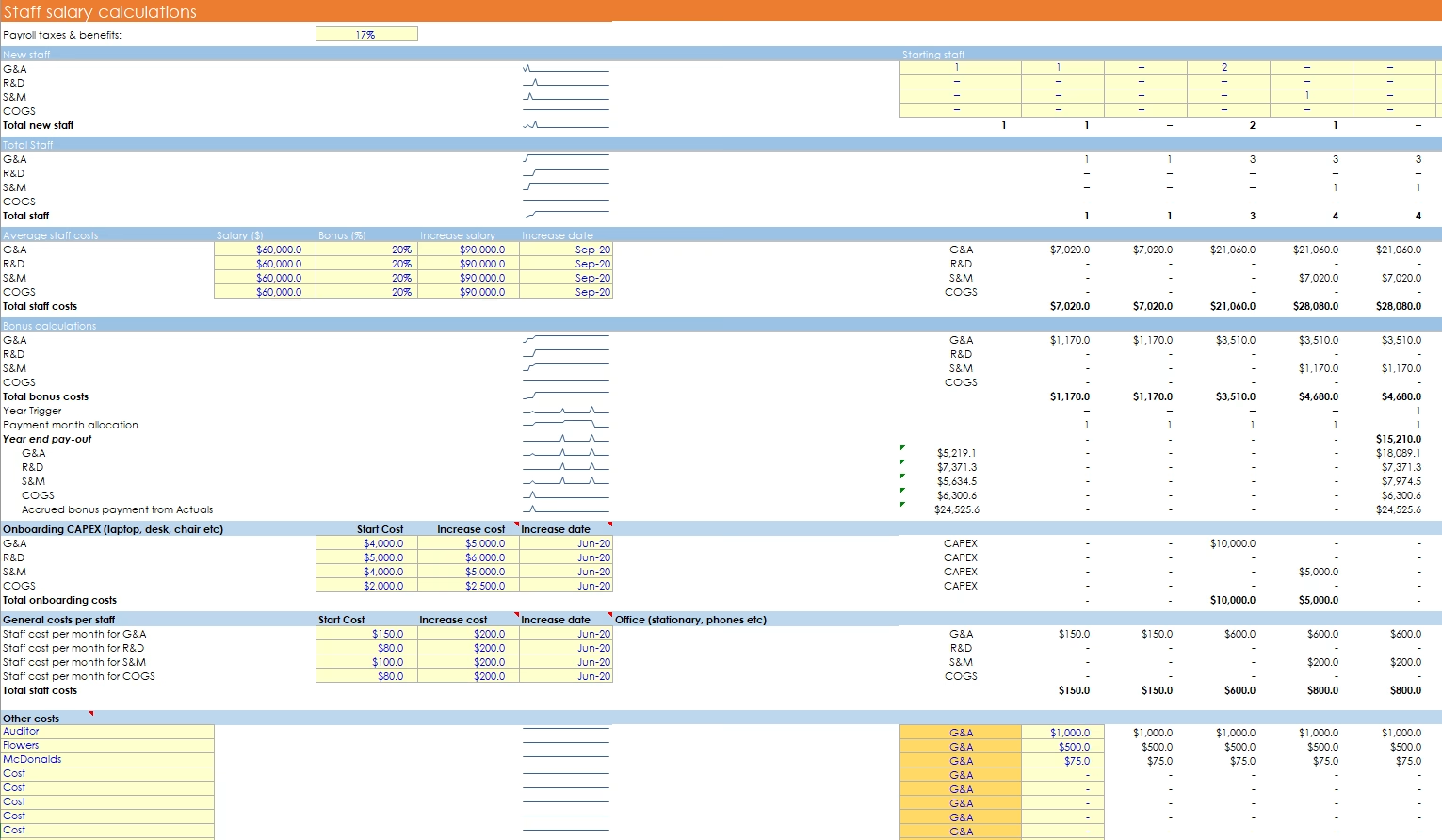
- Simple hiring: Just add the headcount you plan on hiring in any month by category. Easily add benefits/tax and bonuses on top, as well as add a date you want to increase their salary (say at Series-A)
- Simple costs: Quickly add all the ‘other’ costs you need like rent, onboarding costs (e.g. laptops for CAPEX) of staff, and whatever costs you need without having to overthink it. Most costs are calculated by multiplying the average cost by the number of staff you have
Detailed KPIs (186 rows)
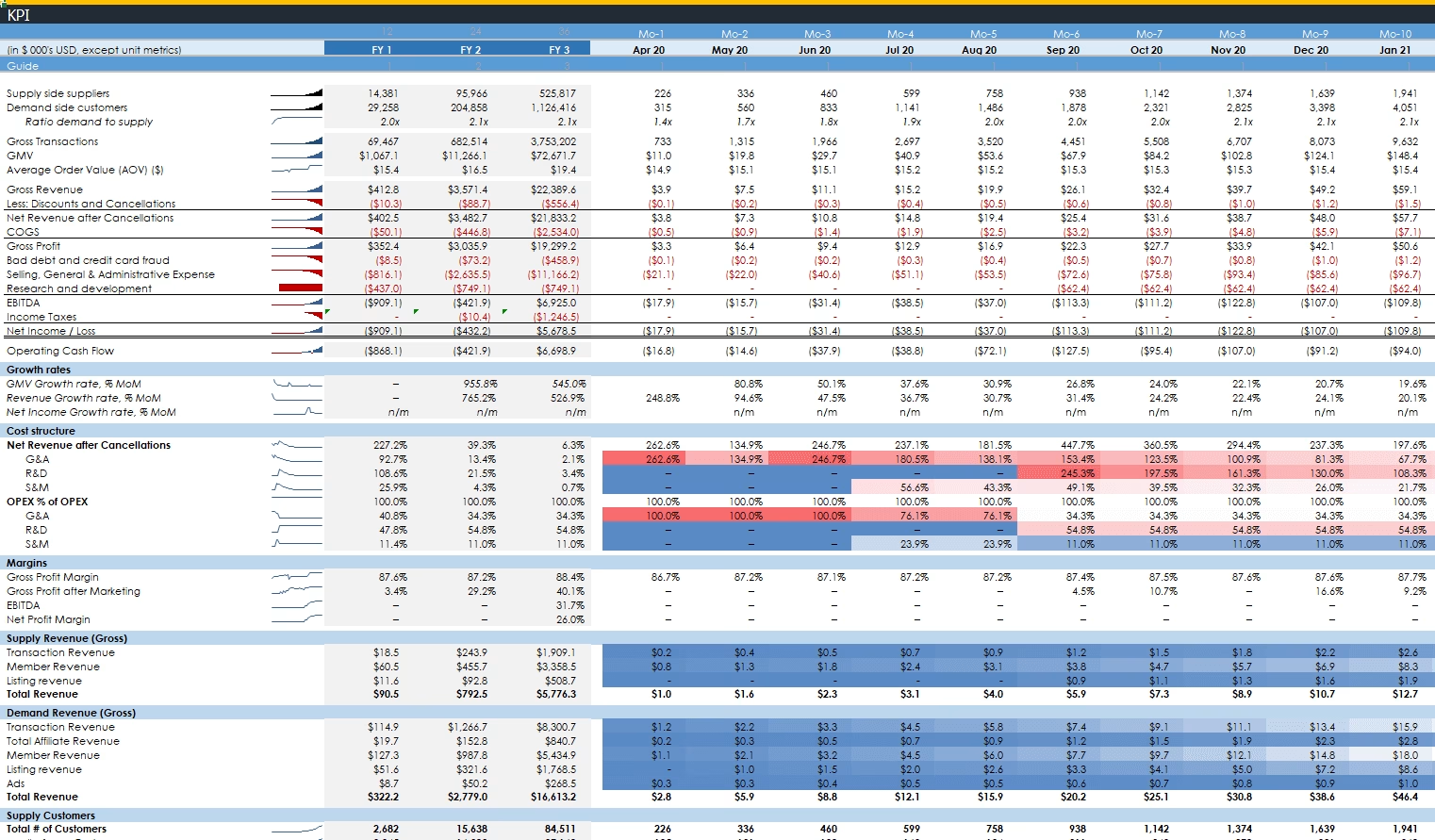
- Detailed KPIs: 186 rows of detailed KPIs
- CAC/LTV: See your key KPIs calculated based on both supply and demand sides. There are also basic and fully loaded variants
- Segments: KPIs for key financials, margins, cost structures, cash burn rate, churn, unit economics, registrations, and headcount
- Dates: Both monthly and annual KPIs
Runway calculator
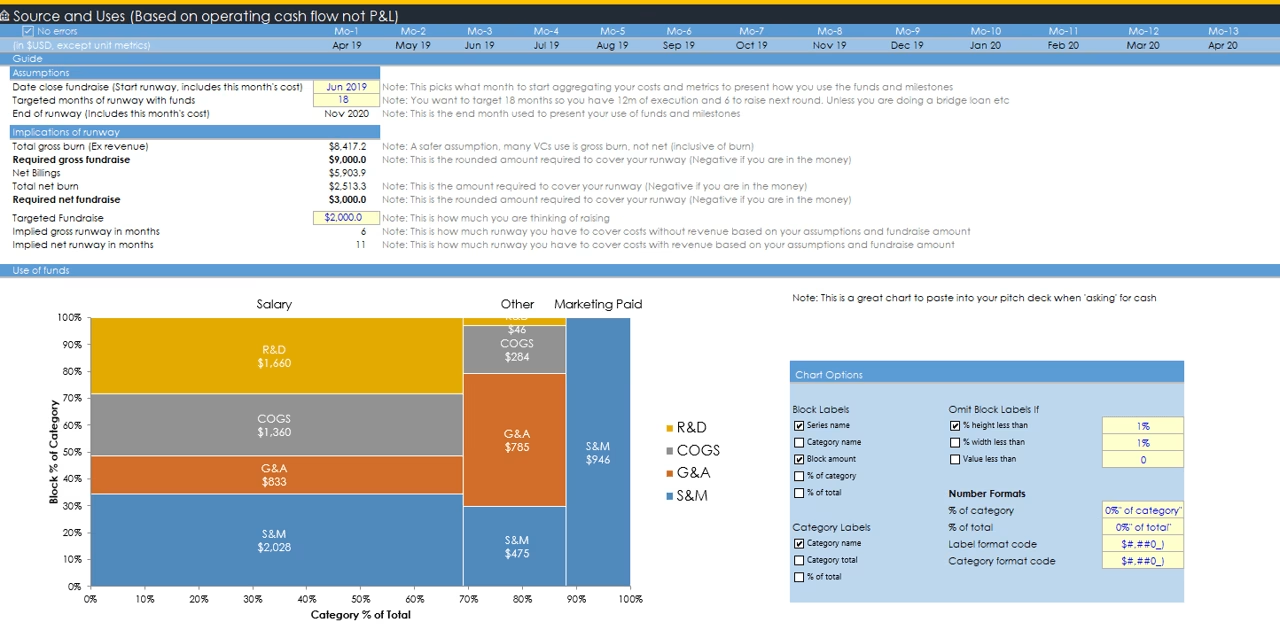
- Runway calculations: Understand your gross and net burn over your defined runway (in months). See how many months your planned fundraising will last based on your model forecasts
- Detailed operating expenses: See exactly where money is being spend per department over your runway
Payment costs
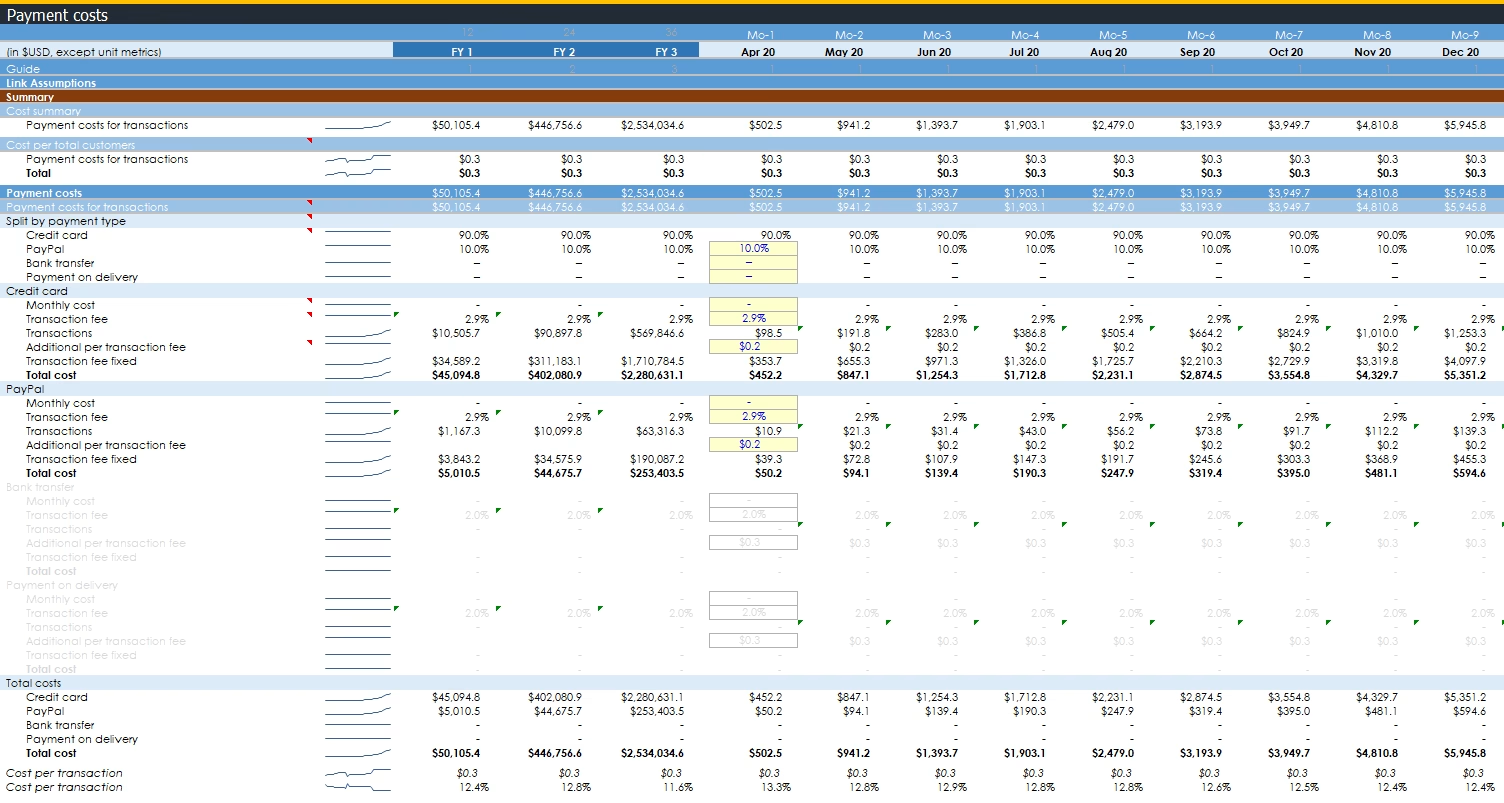
- Payment costs: Simply manage your payment costs with credit card, PayPal, bank transfer and payment on delivery


Comments (0)
There are no comments yet :(