

This is the Alloy pitch deck to raise a $40m series-b round in 2020.
About
Alloy is a developer of an identity verification platform used to check frauds and make identity management effective and simple for banks and financial institutions. Alloy is an API for regulated companies to collect and manage customer data from many different sources. It also engages in helping financial institutions and FinTech companies solve identity and compliance problems. The service allows banks and FinTechs to make better risk and identify decisions, using a single API and dashboard to manage AML, fraud, KYC, and more.
The company also offers an API to help financial services companies access various aggregated identity databases and a dashboard through which to organize and analyze customer onboarding data. It also helps to improve customer conversion through the compliance funnel, reduce risk and fraud, and speed up previously manual back-office processes.
Alloy was founded in 2015 and is headquartered in New York.
They used this deck to raise a $40 million Series B led by Canapi Ventures. New investors Avid Ventures and Felicis Ventures also participated, along with previous backers Bessemer Ventures, Primary Venture Partners, and Eniac Ventures.
Victoria Treyger, a general partner and managing director at Felicis Ventures, told Business Insider interest in companies that streamline manual processes for banks is at an all-time high.
“Right now, fintech infrastructure is the hottest that it has ever been, and it makes sense that it would be,” said Treyger, whose previous investments include insurtech unicorn Hippo and infrastructure fraud startup SentiLink. “If you look at companies like Fiserv and FIS, which are kind of the core fintech infrastructure companies that people think about, they are $90 billion and $60 billion companies and they are from the 1980s and 1960s. There has been very little innovation in fintech infrastructure in the last six decades.”
Alloy’s area of focus — helping financial firms onboard and verify customer’s identity — has specifically come into the spotlight recently as an increasing number of firms embrace digital banking. With no in-person interactions with new customers, financial firms have a tougher time confirming identities and avoiding fraud.
Enter Alloy.
“When you’re a bank trying to move your business online, opening deposit accounts online or on mobile, or a fintech company that’s obviously sort of challenging those banks in certain ways, it’s really hard to verify people because the databases and methods that we have were not built for today’s world,” Laura Spiekerman, Alloy cofounder and chief revenue officer, told Business Insider.
But even with Alloy’s strong position within the market — Spiekerman said the startup doubled revenue and clients in 2019 — the fintech did take time to reevaluate things when the pandemic first hit. However, after some scenario planning in March, the startup was confident it had enough runway to weather any potential storm.
In actuality, April and May ended up being strong months for the fintech. And by early summer, Spiekerman said, the decision was made to raise another round.
“We thought, let’s just take advantage of this moment and see what we can do,” she added.
With limitations around travel, Spiekerman said the goal was to keep the timeline short. A short list of roughly six firms that the fintech was familiar with was established. The entire process, Spiekerman said, lasted roughly two weeks.
Looking ahead, Spiekerman said the focus for Alloy will be to go deeper, not wider. Essentially, the goal is to aid financial firms with any questions it may have about a client’s identity.
“Whether it’s they’re enrolling in online and mobile banking for the first time, or they’re making some sort of funky, high-risk transaction, we want to be behind the scenes, enabling them to make a better real-time decision there,” Spiekerman said. “So it’s really about powering that entire life cycle of customer decision.”
Funding rounds
| Announced Date | Transaction Name | Number of Investors | Money Raised | Lead Investors |
| September 16, 2020 | Series B – Alloy | 7 | $40M | Canapi Ventures |
| Mar 1, 2020 | Venture Round – Alloy | 1 | — | — |
| Sep 17, 2019 | Series A – Alloy | 4 | $12M | Bessemer Venture Partners |
| Jul 31, 2019 | Series A – Alloy | 1 | — | — |
| Feb 15, 2019 | Seed Round – Alloy | 1 | — | — |
| Oct 18, 2017 | Seed Round – Alloy | 5 | $3.8M | Eniac Ventures |
| Nov 20, 2015 | Seed Round – Alloy | 5 | — | Techstars, Techstars New York City Accelerator |
| Aug 10, 2015 | Non Equity Assistance – Alloy | 1 | — | Mastercard Start Path |
Pitch deck review summary
Structured summary review
Words
Typically there aren’t enough words to explain anything. When they do use words they don’t explain things simply.
Slide length
The deck is definitely on the short end and there re important slides missing.
Headers
There are headers on each slide (almost all of them) but they are rubbish. They grunt out a word like it’s on a checklist and expect you to read the whole slide to see what the point is.
Appearance
The design is fine. There is not much need to do anything more fancy than what they have. Their content is pretty rubbish though.
Narrative
I sense that they attempted to imbue the deck with a narrative, but have only sort of put slides in the right order.
I doubt this is the deck that they actually sent to investors.
Structure
Slide structure is fine other than a slide where there is no header at all.
Slides
They have not covered a lot of slides that matter such as their market sizing slide. The deck isn’t good.
Slide by slide review
First off this deck is 12 slides. I can’t possibly imagine they raised a $40m series-b with that.
Cover is fine, but delete the date as it just reminds investors how long the startup has been raising.
WTF, they’re just repeating the previous slide and adding something about fintech. Pointless slide.

Slides like these are the definition of lazy. It’s about the min you would do for an on-stage presentation.
The headers are rubbish. If you write a header explain the point. They’re just mentioning a checklist topic then saying feck off and read the whole slide to see what the actual point is.
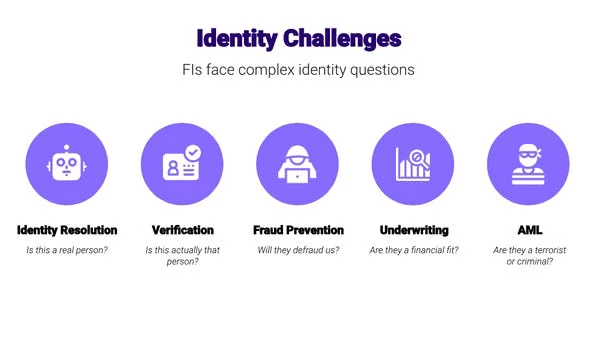
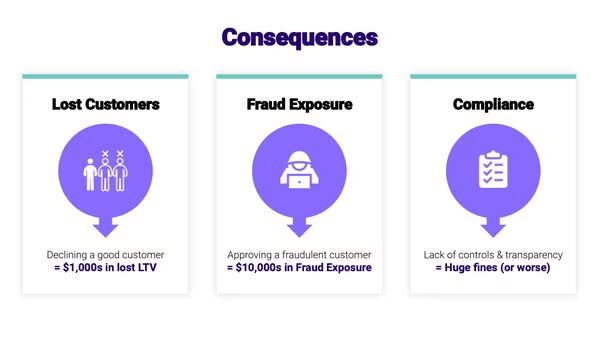
What are the consequences? Use your big boy words, dig deep and explain.
Three points are always good, the slide structure is fine, though they think icons are more important than words.
I’m pretty sure that there are competitors in the market? Perhaps it would be a good idea to mention them?
Why are 50% of customers lost to manual reviews? According to whom? What is the source for that? 50% is a strangely round number.
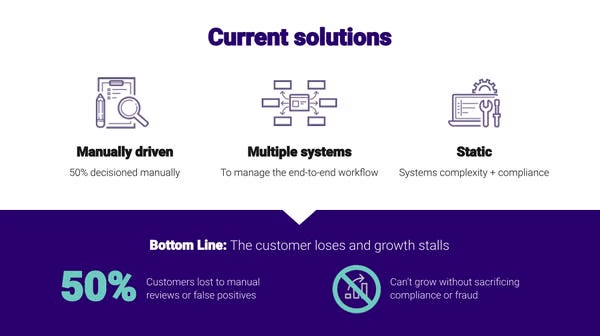
This is another stupid slide.
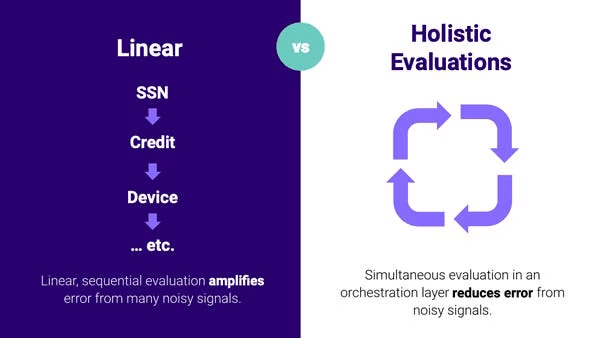
How is this any different to how other people do it? The slide doesn’t tell me very much.
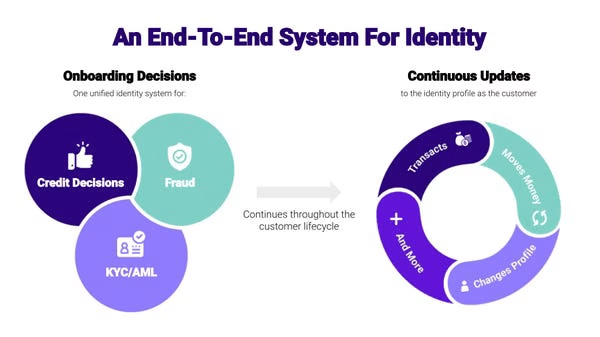
Reduces false positives by how much?
Don’t write long sentences.
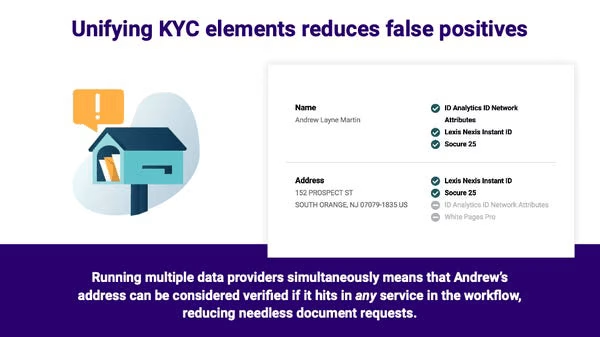
Can you look at this slide and tell me what the point is in under 5 seconds?
I don’t know how holistic evaluations work.
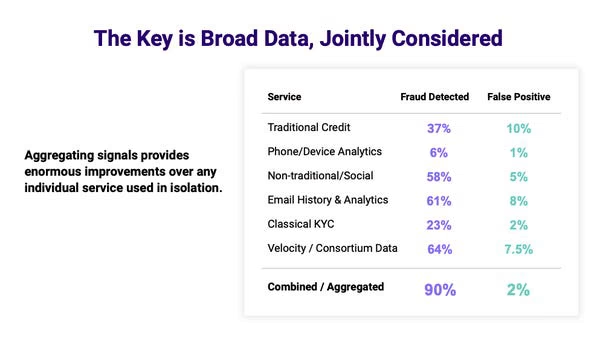
What’s going on with the purple and green text? Is high or low good? I’m not sure what is going on with the slide.
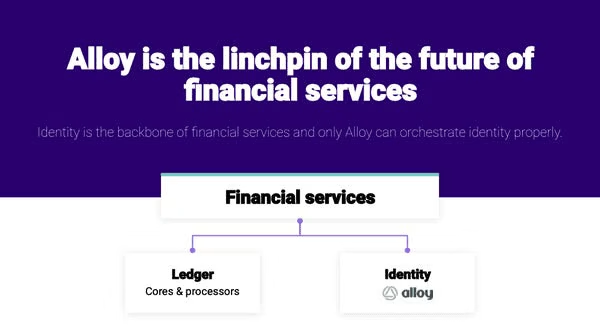
What’s the point of this slide?
Deck Collection
See the rest of the collection here:




Comments (0)
There are no comments yet :(