


This is the Altruist pitch deck to raise a $50m series-b round in 2021. Correction, it’s a document done by a communications company, so you can have a look if you really like (and note how not to do a deck).
About
Altruist is a FinTech company that develops a commission-free digital investment platform. The platform is designed to help independent financial advisors grow faster, cut costs, eliminate paperwork, and delight their clients. The company was founded in 2018 and is headquartered in Venice, California.
Jason Wenk started his career at Morgan Stanley in investment research over 20 years ago. Now, he’s running a company that is hoping to broaden access to financial advice for less-wealthy individuals.
The startup just raised $50 million in Series B funding led by Insight Partners with participation from investors Vanguard and Venrock. The round brings the Los Angeles-based startup’s total funding to just under $67 million.
Cofounder and CEO Wenk declined to share Altruist’s current valuation.
Founded in 2018, Altruist is a digital brokerage built for independent financial advisors, intended to be an “all-in-one” platform that unites custodial functions, portfolio accounting, and a client-facing portal. It allows advisors to open accounts, invest, build models, report, trade (including fractional shares), and bill clients through an interface that can advisors time by eliminating mundane operational tasks.
Altruist aims to make personalized financial advice less expensive, more efficient, and more inclusive through the platform, which is designed for registered investment advisors (RIAs), a growing segment of the wealth management industry.
Many RIAs currently rely on investment management platforms from Fidelity and Charles Schwab for custody and clearing, which together account for 80% of market share among RIAs, Wenk told Insider in an interview. He said that these platforms are often costly and inefficient and do not include functions like performance reporting and client billing, which he says forces advisors to buy different software packages for different tasks.
He said this friction makes it difficult for independent advisors to take on clients with smaller portfolios, particularly under $100,000, because of the associated cost.
Altruist seeks to remedy this by making its tools easy for advisors to use, Wenk said. He sees expanding access through driving down cost as a core impact of Altruist’s solution.
“These large wealth management firms, they’re definitely pricing out not just the average [investor], but they make reasonably wealthy people feel poor,” Wenk said. “It’s sort of preserving this very upper echelon, right? The 1% of the 1%. So for 20 years, I’ve always just felt like, “why is the best help always so inaccessible?”
Altruists makes revenue through advisory and brokerage fees as well as charging for software as a service, said Wenk. Its SaaS fee to advisors, according to Wenk, is 90% cheaper than the typical software stack they use.
Its advisory revenue comes from its turnkey model portfolios, which are sourced from well-known money managers like Vanguard and BlackRock so RIAs can build custom solutions off of them. It also makes a small portion of its revenue from providing trading functions as a broker-dealer. A spokesperson for Altruist declined to share its assets under custody.
The Altruist team has added 100 new hires in the past year, mostly in engineering and product design, Wenk said. Now, the team employs around 110 people full-time and 20 on a contract basis, and Wenk said it has plans to grow to 200 employees by the end of 2021.
Wenk sees a distinct need for financial advisors who can help clients navigate “life events” like marriage or layoffs. While Wenk said he hopes more individual investors start to use roboadvisors instead of “trading naked puts on Robinhood,” he sees robos only as a starting point for new investors rather than a lasting advisory solution.
“There are millions of people who need help with their money today,” Wenk said. “Their only options are to kind of figure it out themselves using do-it-yourself tools. And then only after they get rich can they potentially hire an advisor.”
While Wenk says Altruist will use the proceeds from its Series B to “keep doing what we’re doing,” he said the company is particularly focused on how it can more effectively connect people who need help with the advisors on its platform.
“The financial industry is mostly old white men,” Wenk said. “Our users are far more closely representative to the world at large, which is really kind of a beautiful thing. And then the end customers are all over the map. What’s really cool is that our users can be startup advisors that want to serve a really unique segment of a market that would otherwise never get a chance to have access to financial advice.”
Funding rounds
| Announced Date | Transaction Name | Number of Investors | Money Raised | Lead Investors |
| May 19, 2021 | Series B – Altruist | 3 | $50M | Insight Partners |
| Jan 11, 2021 | Venture Round – Altruist | 3 | — | Venrock |
| Sep 9, 2019 | Series A – Altruist | 2 | $8.5M | Venrock |
Pitch deck review summary
Structured summary review
The deck is 10 slides long. Given the last slide has an email address for a communications company and the cover says it is a ‘briefing deck’ this clearly isn’t their real investor deck, but is rather shared in the hope of building some awareness.
Slide by slide review
Clearly, this isn’t their deck on inspection. Heck, it is embargoed which is PR speak for “you can’t share this till a certain time”.
It’s pretty lame they are sharing this.
Corporate speak. This means nothing. Don’t write stuff like this in a deck.
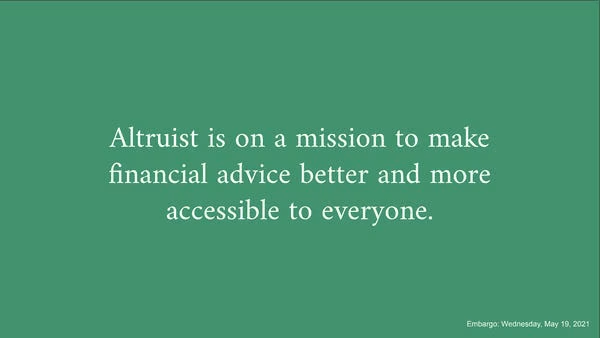
This is a much better ‘one liner’ to explain what the startup does. The slide could be structured better, but it’s fine.
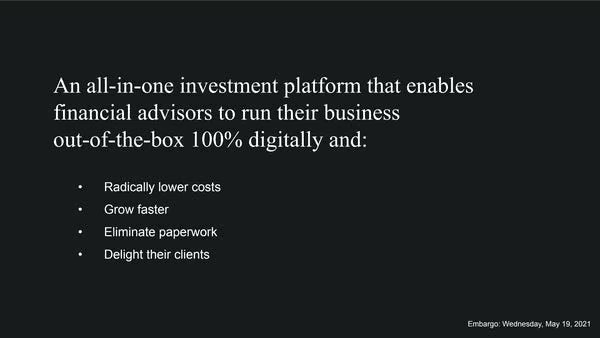
Don’t make a slide like this in your deck. It’s the sort of slide you do quickly for internal meetings.
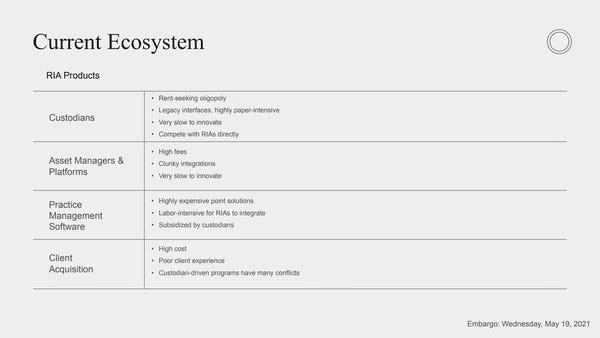
This is a lazy slide.
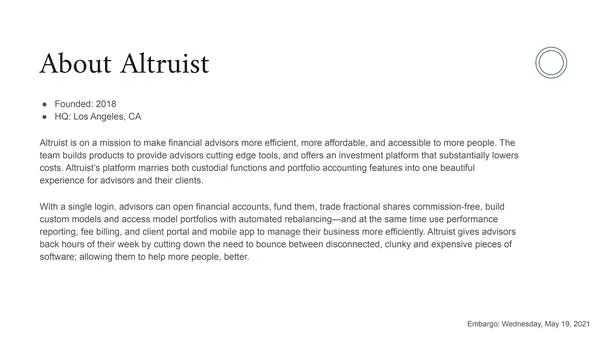
This isn’t a slide you put in a pitch deck. It’s PR bla.
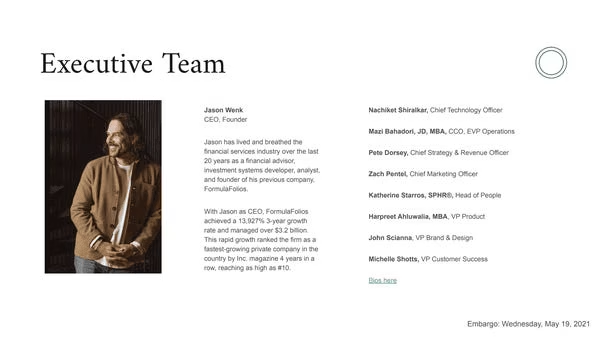
This isn’t how you write a team slide. You want short bullet points. When I see an indulgent ‘staring off into th distance’ photo like this I just think ego trip.
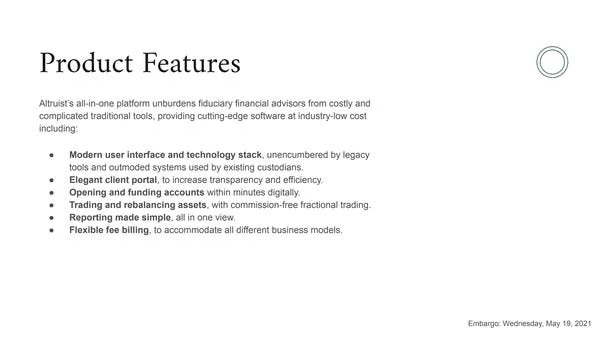
I mean, couldn’t they use an image of the product just to get things going. It’s just a lame list of bullet points.
What is this slide? Traction? It’s a weird slide.
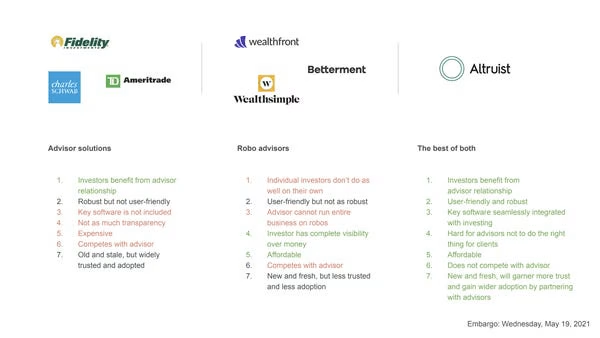
Pointless.
Deck Collection
See the rest of the collection here:




Comments (0)
There are no comments yet :(