


This is the Ascend pitch deck to raise their $1.2m series-A round in 2017 lead by Accel. They raised before they had any customers.
About
Ascend provides the world’s first Autonomous Dataflow Service, enabling data engineers to build, scale, and operate continuously optimized, Apache Spark-based pipelines with 85% less code. Running natively in Microsoft Azure, Amazon Web Services, and Google Cloud Platform, Ascend combines declarative configurations and automation to manage the
underlying cloud infrastructure, optimize pipelines, and eliminate maintenance across the entire data lifecycle. Ascend is backed by the world’s leading venture capital firms, including Accel, Sequoia Capital, Lightspeed Venture Partners, and 8VC; and supported by notable advisors, such as Kevin Scott, CTO of Microsoft; Maynard Webb, Board Member Salesforce, Visa; Scott McNealy, former Sun Microsystems CEO; Luanne Dauber, former CMO at Confluent and VP Marketing at Pure Storage; and Deep Nishar, Senior Managing Partner of Softbank Vision Fund.
The tools for wrangling big sets of data and making sense of the information within them are changing faster than most businesses can keep up with, according to Sean Knapp, whose startup Ascend helps companies build and scale their data infrastructure with less code.
“The technologies are so insanely powerful, but they’re also hard to use,” Knapp told Business Insider. “It’s like trying to drive a F1 sports car. If you know exactly what you’re doing, and you know all the lines on the track, you’ll be good. But most people aren’t race-car drivers.”
Ascend is essentially autopilot for data architecture. Its service lets customers create pipelines for extracting data from various sources and loading it into other databases. They might be moving their technology stack from servers on the premises to the cloud, or gathering user data that they want to process and parse in separate analytics tools. The company says it builds these pipelines using 85% less code, reducing the number of bugs for data engineers to fix.
Funding rounds
Allegedly Ascend pitched only 4 VC firms and got term sheets from all of them. Nice! But things are never as trhey seem.
Knapp said he has been courting these partners from the company’s earliest stages, before there was a pitch deck to share. This makes a big difference as the partners can get to knwo you.
| Announced Date | Transaction Name | Number of Investors | Money Raised | Lead Investors |
| May 1, 2017 | Series A – Ascend.io Logo | 4 | $15M | Accel |
| Dec 15, 2015 | Seed Round – Ascend.io Logo | 7 | $4M | Lightspeed Venture Partners, Sequoia Capital |
Pitch deck review summary
The deck is solid. It’s fairly short and to the point. It assumes that investors know quite a lot. I know this was the case because the founder said so.
It’s worth reading to see what quality thoughts look like. You can see how they have attempted to explain their thinking.
Structured summary review
Words
The amount of words per slide is solid. I don’t really have complaints.
They don’t write any paragraphs, and generally, everywhere they use bullet points.
Slide length
There are no page numbers…
There are 12 slides. This is on the super short end. When you write a deck this short, you are basically saying ‘shut up and give us money to see if this business will work, or not. That might work in the Bay Area, but good luck in other countries.
The quality of the slides they do have is high though.
Headers
They just declare what the slide is. They don’t have descriptive headers.
I have three levels of quality headers:
- Slide title: Founders copy the Sequoia outline without understanding they are not just meant to write ‘problem’
- Highlighted title: The slide header lightly calls attention to the core point but doesn’t explain why. ‘Productivity is the holy grail’
- Explained problem: The slide is fully explained so you understand the content without reading. ‘Staff that want to work are 17x more productive than staff who feel they simply have to work’
Ascend are in camp 1. They grunt one or two words and you have to figure the rest out. I hate when people do this.
Appearance
It’s a functional deck. It’s focused on communicating quality thoughts rather than compensating with making things look pretty. This is more like a deck I would like to recieve.
Narrative
There isn’t really a narrative. The slides generally flow, but they’re ticking boxes in some regard.
The deck is a bit of a funny one. The deck does flow and has a narrative of sorts, but it is not as simple as it could be.
Structure
Things are aligned as they need to be. It could easily be improved, but the upside is rela5tively minimal.
Slides
There are only 12 slides. The VCs already know the team so they would have covered the basics already. Explaining too much isn’t required as it would be for you and me.
Slide by slide review
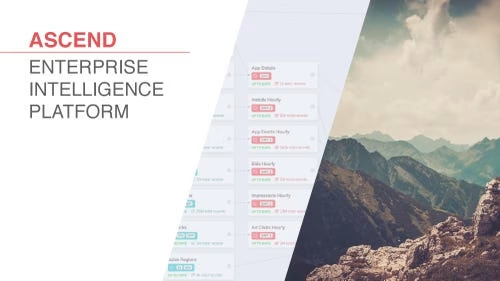
The cover is absolutely fine.
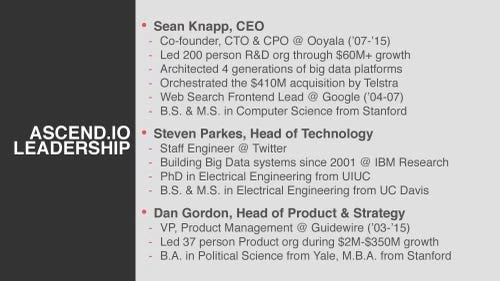
They start out with the team slide just to get things out of the way. The VCs already know the team. I always want to have pictures of the team on the slide. They could have easily fit them in if the header was at the top and not taking up so much space on the right.
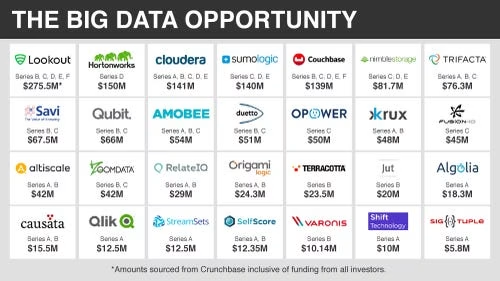
The header is not helpful. I have to figure out what the opportunity is or means. There are a bunch of fundraises for startups, but what’s the takeaway? If they just explained it then this could be a great slide.
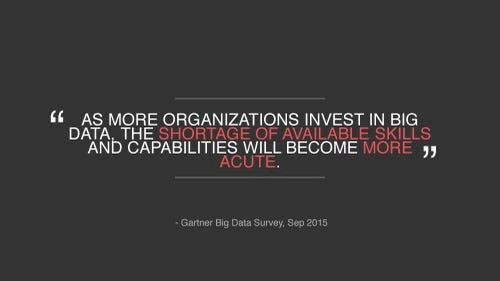
Quotes are lame. The point is solid. Can this not be demonstrated with data? I looked at a startup like this a few years back and I did find data around jobs. So it does exist.
The points all make sense. I don’t think anyone who knows the space would disagree.
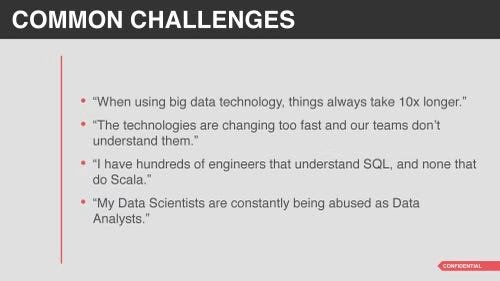
This slide is a little slow to read, but the content is smart. These are the kinds of insights investors love to read.
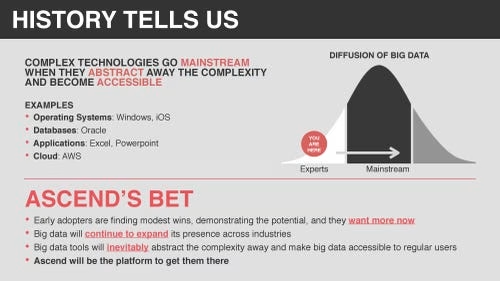
Content is solid, but I’d like to have an indication on the number of customers for revenue potential.
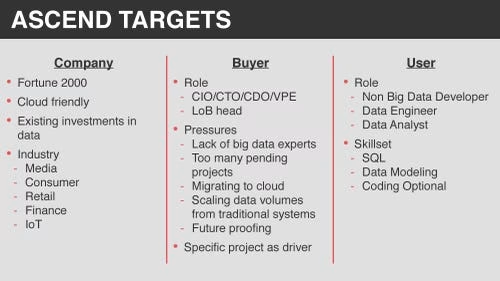
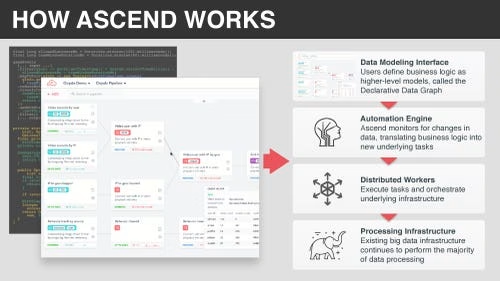
Solid slide. The red ticks are a bad call. They should be green (and centrally aligned).
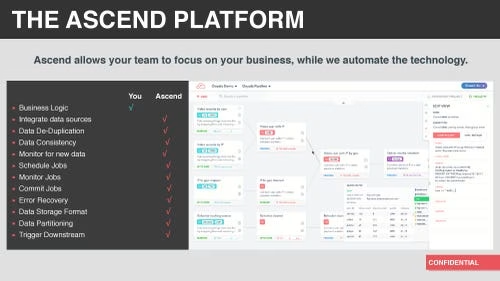
Solid slide. The header sucks as usual.
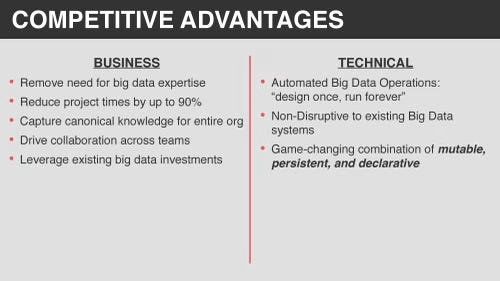
Are these really competitive advantages? The business ones sound like problems they solve?
The technical ones are good, but how do they compare to the competition?
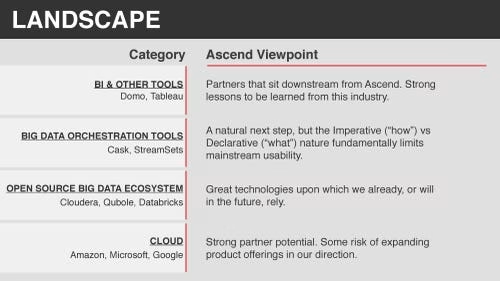
I don’t know if Ascend has direct competition? The thoughts are solid though. I like the approach.
The statement is funny. Does it really add anything though?

Deck Collection
See the rest of the collection here:




Comments (0)
There are no comments yet :(